

Copper It is an essential micronutrient For the healthy growth of marijuana plants, playing a crucial role in photosynthesis, cellular respiration and structural strengthening. Its deficiency can cause chlorosis and leave of leaves, while excess leads to toxicity. It is vital to monitor and adjust copper levels through soil analysis and proper fertilizer management to maintain plants in optimal conditions and ensure a successful crop.
Marijuana cultivation, like any other agricultural crop, depends largely on a careful balance of essential nutrients to ensure healthy growth and optimal production of plants. Among the essential nutrients, macronutrients such as nitrogen, phosphorus and potassium usually receive the greatest attention. However, micronutrients, although required in minor quantities, are equally crucial for the development of plants. One of these essential micronutrients is copper, an element that, although it is needed in small doses, plays vital roles in numerous aspects of the growth and health of the marijuana plant.
What is copper for marijuana plants
Copper sulfate What is it for in plants? It is a vital micronutrient that performs several crucial roles in the development and health of marijuana plants. Copper is essential for the proper functioning of several processes in the marijuana plant. The proper copper presence also contributes to the structural strengthening of marijuana plants, influencing the integrity of their cell walls and lignin synthesis, resulting in stronger and more resistant stems.
Copper benefits in marijuana plants
Copper is a vital micronutrient that performs key roles in the development and health of marijuana plants. Here are its main benefits:
- Drives photosynthesis: Copper is essential for efficient photosynthesis, facilitating the transformation of sunlight into chemical energy necessary for plant growth.
- Improve cellular breathing: It acts as a catalyst in several important enzymatic reactions that help convert energy sugars, vital for plant growth and development.
- Strengthens the plant structure: Copper influences the synthesis of lignin, a critical part of the cellular structure of plants that strengthens the stems and helps to support the weight of the buds, increasing their resistance to strong winds and heavy rains.
- Pathogenal protection: It has fungicidal and bactericidal properties that protect disease plants, which is especially valuable in wet climates and cultivation conditions where plants can be more vulnerable to infections.
- Optimizes the development and maturation of the butt: It ensures that plants have the ability to develop and mature high quality cogollos, directly affecting the power and cannabis terper profile.
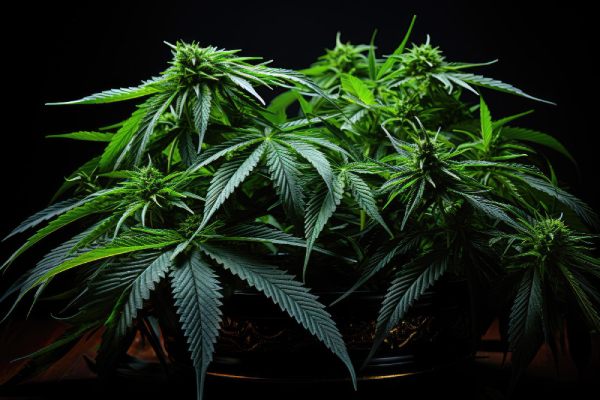
Symptoms and prevention of copper deficiency in marijuana
Copper deficiency in marijuana plants can manifest in several ways, and it is crucial to detect these early symptoms to avoid a negative impact on plant growth and production. One of the most common signs is chlorosis, which is characterized by a yellowish of young leaves that can extend if the deficiency is not corrected. Unlike other deficiencies where chlorosis occurs first in old leaves, copper deficiency first affects new leaves because copper is a non -mobile nutrient inside the plant.
Another remarkable symptom is Leaves deformation, which may appear twisted or deformed. In severe cases, the terminal outbreaks of the plant can die and the leaves can develop irregular edges or a wrinkled appearance. In addition, copper deficiency plants often exhibit stunted growth and a reduction in the quality and quantity of flowering.
Copper deficiency prevention
Preventing copper deficiency is essential to maintain a healthy and productive crop. An effective strategy is to select an adequate type of soil that has a good capacity to retain micronutrients, including copper. Soils with high levels of organic matter often have an improved capacity to supply copper to plants. In addition, it is important to consider the pH of the soil, since a pH too high or too low can limit copper availability. Generally, a pH between 6.0 and 7.0 is ideal for optimal copper absorption.
Fertilization practices also play a crucial role in the prevention of copper deficiency. Using fertilizers containing copper in the recommended doses can help maintain adequate levels of this micronutrient. It is essential to follow the manufacturer's instructions and avoid excess fertilization, which can lead to a Nutrient imbalance and affect copper availability. Additionally, cultivators should consider performing soil analysis or plant tissue periodically to monitor copper levels and adjust fertilization practices as necessary.
Copper lack solutions in cannabis plants
Correcting the lack of copper in marijuana plants is essential to ensure healthy growth and optimal production. Here some effective strategies to address this problem are described.
- What to do to solve a copper deficiency: To correct a copper deficiency, it is essential to act quickly. First, verify the pH of the substrate, since an incorrect pH can block copper absorption. Adjust the pH to a range of 6.0 to 7.0. Then apply a fertilizer containing copper. It is important to follow the manufacturer's instructions to avoid overdose, which could be counterproductive.
- Root washing to restore the health of the root zone: Root washing is a process that consists of cleaning the root system of the plant, eliminating excess accumulated salts and minerals that can affect the absorption of nutrients such as copper. This procedure involves watering plants with clean water to adjusted pH, which helps restore chemical balance in the soil or substrate.
- Other options to deal with copper deficiency: If adjusting the pH and direct copper application are not enough, other options include the use of copper chelates, which are more easily absorbable copper forms for the plant. Quelates can be particularly useful in soils with problems of high alkalinity or low organic matter.
Necessary copper quantity
During different growth stages, copper needs can vary slightly. In the vegetative growth phase, copper help in the development of strong roots and in the formation of the basic structure of the plant. As the plant enters the flowering stage, copper is still important for photosynthesis and breathing, essential processes for the formation and maturation of the buds. The amount of copper necessary in cannabis plants varies according to different factors, including the growth stage:
- Vegetative germination and growth: During these early stages, plants require relatively low copper levels. An adequate supply ensures the appropriate development of young roots and the initial growth of stems and leaves.
- Flowering and maturation: As plants enter the flowering phase, copper demand can increase slightly. This micronutrient is crucial for the formation of healthy flowers and to maximize the production of cannabinoids and terpenes, thus improving the quality and power of shoots.
The typical copper concentration in a nutritious solution for cannabis should be in the range of 0.05 to 0.5 ppm (parts per million). It is vital to monitor and adjust these concentrations, since both deficiency and excess copper can cause significant crop problems. Maintaining a precise balance is crucial for the optimal development of the plant and the maximization of its genetic potential.
Recommended products and its correct application for copper deficiency
The treatment of copper deficiency in marijuana plants implies the careful use of specific products designed to replace this essential micronutrient. Next, it is detailed how to use copper sulfate correctly, one of the most common treatments:
Rootbastic atami
Rootbastic is a highly concentrated roots stimulator produced by Atami, a company known for its nutrients and high quality additives for plants, if you are wondering what the Best root stimulator Visit our article to know how to choose it and what are the best products.
This product is designed to increase the expansion and health of the plants root system during the first phases of growth or in critical moments of transplant stress. The Rotbastic formula incorporates a robust combination of nutrients and bio -stimulants that favor vigorous root development and improves the general resistance of plants.

Rootbastic Atami contains a phosphorus rich mixture (P), potassium (k) and a series of amino acids and vitamins. Phosphorus and potassium levels are particularly high compared to other root stimulators, which helps promote rapid and strong root growth. In addition, it includes:
- NPK (4-14-4): Indicates that the product contains nitrogen. 3.69%, phosphorus pentoxide. 14.12%, potassium oxide. 4.07%, Natrium oxide. 0.19%, calcium oxide. 0.23%, magnesium oxide. 0.16%, sulfur trioxide. 0.59%, boron. 0.014%, copper. 0.036%, iron. 0.101%, manganese. 0.042%, zinc. 0.043%, a relationship that stimulates the development of roots.
- Amino acids: Organic compounds that help in protein formation, essential for the growth of new root cells.
- Vitamins: They include vitamin B1 and other B vitamins complexes that strengthen stress resistance and enhance plant's energy metabolism.
How to apply rootbastic correctly:
The Rotbastic application must be done carefully due to its high concentration. Here are the recommendations for its use:
- Dosage: Start with a low dose, especially in young or sensitive plants. The recommended dosage is 0.1 to 0.3 ml per liter of irrigation water.
- Frequency: Apply during the first three to six weeks of the plant's life cycle, coinciding with the rapid growth phases of the roots.
- Application method: Mix rootbastic with irrigation water and apply to the root zone. Be sure to adjust the pH of irrigation water after adding rootbastic, maintaining an ideal pH between 5.5 and 6.5 to maximize nutrient absorption.
- Compatibility: Rootbastic can be used in combination with other nutrients and additives, but it is important to avoid supercharging. Always check the response of the plants to adjust the dosage if necessary.
Grow Green House Feeding
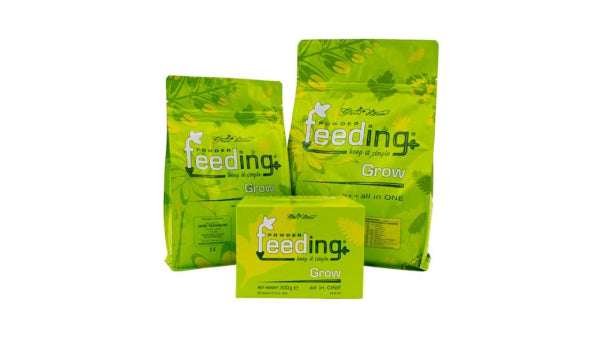
Green House Feeding Grow is a powder fertilizer formulated specifically for the vegetative growth phase of cannabis plants. This product is part of a fertilizer line of the renowned Green House brand, which is designed to simplify the nutrition process by offering specific formulas For different stages of the life cycle of the plant. Grow is especially useful for promoting vigorous development in the vegetative phase, preparing plants for abundant and healthy flowering. Grow contains a balanced mixture of macronutrients and micronutrients essential for plants in their growth stage. Its main chemical compounds include:
- NPK (24-6-12): A high proportion of nitrogen (24%), followed by phosphorus (6%) and potassium (12%), which is ideal for vegetative growth. Nitrogen is fundamental for the development of leaf and stem mass, while phosphorus and potassium support the development of roots and the general health of the plant.
- Micronutrients: It includes elements such as iron, manganese, zinc, copper, molybdenum and boron, which are crucial for different metabolic and enzymatic processes within the plant.
How to apply Grow correctly:
The correct application of Green House Feeding Grow It is vital to maximize its effectiveness and avoid overfertilization problems:
- Dosage: The recommended dosage is 1 to 2 grams per liter of water, depending on the growth stage and the specific needs of the plant.
- Frequency: Apply with each irrigation during the vegetative growth phase. It is not necessary to add it daily if you laugh frequently, but it must be adjusted according to the response of the plants.
- Application method: Dissolve the dust completely in water before applying it. It is important to ensure that the fertilizer is completely solubilized to avoid the accumulation of salts in the soil or the culture medium.
- PH adjustment: After mixing Grow in the irrigation water, verify and adjust the pH of the water. Ideally, the pH must be in the range of 5.5 to 6.5 to ensure optimal nutrient absorption.
Canna Canna Start
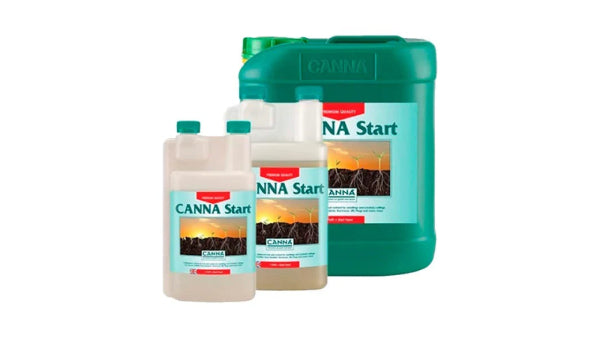
Canna Start is a unique and balanced fertilizer, specially formulated for seed plants and cuttings in its early stages of growth. Is part of the line of products of Canna, a well -known brand in the hydropony industry and cannabis cultivation for its high quality nutritional solutions. Canna Start provides young plants for all macro and essential micronutrients necessary for an optimal start of life. Canna Start has a formula that is designed to meet the nutritional needs of plants in their early stages. The components include:
- NPK (2-1-2): This nutritional balance with 2% nitrogen, 1% phosphorus and 2% potassium is ideal for initial development. Nitrogen supports foliar growth, while phosphorus encourages the development of roots and potassium improves the general health and resistance of plants.
- Micronutrients: It includes essentials such as iron, manganese, zinc, copper, molybdenum and boron, which are crucial for early development and help establish a strong basis for future growth.
How to apply Canna Start:
The proper application of Canna Start It is crucial to ensure that young plants receive the necessary nutrients without the risk of overfertilization, which can be especially harmful in this vulnerable stage.
- Dosage: The general recommendation is 2 to 4 ml per liter of water. However, it is important to follow the specific instructions in the container, since the concentration may need adjustments depending on the culture medium and the irrigation system.
- Frequency: Apply in each irrigation during the seed phase and cuttings. Canna Start is safe to use with each irrigation due to its soft formulation, specifically designed for young plants.
- Application method: Mix well with water before using and make sure the product is completely solubilized. Apply this solution directly to the growth medium, either land, coconut or hydroponic systems.
- PH adjustment: After preparing the nutritious solution with Canna Start, adjust the pH of the water between 5.5 and 6.2 to maximize the absorption of nutrients by young roots.
Cali Pro Grow A+B of Emerald Harvest
Cali Pro Grow A+B of Emerald Harvest It is a two -part fertilizer system specifically designed for the plant's vegetative growth phase. This product combines essential nutrients in two separate solutions, A and B, which work together to provide a complete and balanced nutritional support, facilitating robust and healthy growth. It is ideal for growers who seek to maximize the efficiency of their food program and ensure the optimal development of their plants during the vegetative stage. Solutions A and B of Cali Pro Grow They contain a mixture of macronutrients and micronutrients that must be mixed together before use:
- Part A: It includes high concentrations of nitrogen and potassium, along with essential micronutrients such as iron, copper, manganese, molybdenum, sodium and zinc.
- Part B: This complements this with phosphorus, magnesium and the remaining micronutrients necessary for complete nutrition.
- NPK from part to: Generally higher in nitrogen.
- NPK of part B: Balanced with emphasis on phosphorus and potassium.
This division ensures that nutrients that could react to each other and form insoluble precipitates are maintained separately so far from the application.

How to apply Cali Pro Grow A+B:
The correct mixture and application of Cali Pro Grow A+B are crucial for the effective absorption of nutrients:
- Dosage: The typical dosing for each part is 1 to 4 ml per liter of irrigation water, depending on the growth stage and the specific needs of the plants.
- Preparation: Mix part A first in the water and shake well. Then add part B and mix again. It is essential not to mix parts A and B directly before diluting them in water to avoid unwanted chemical reactions.
- Frequency: Apply this nutritional solution in each irrigation during the vegetative growth phase. Make sure not to supercharge, adjusting the doses according to the answers observed in the plants.
- PH adjustment: After preparing the nutritious solution with Cali Pro Grow A+B, it is important to adjust the pH of the water to a range of 5.5 to 6.5 to optimize the absorption of nutrients.
Management of excess copper
The proper management of copper levels in marijuana plants is crucial to avoid toxicity, which can be as harmful as deficiency. Here we will discuss how to avoid excess copper and how to differentiate its symptoms from the problems caused by general overfertilization.
How to avoid excess copper in marijuana plants
Excess copper in marijuana plants can mainly derive from overfertilization or a soil naturally rich in copper. To prevent these problems, it is important to follow some tips:
- Careful fertilizer use: Always follow the manufacturer's instructions when applying fertilizers containing copper. Use the recommended amounts and avoid too frequent applications.
- Soil analysis: Perform soil analysis regularly to determine copper levels and other nutrients. This is especially important if grown in areas where soils can be naturally high in heavy metals.
- Floor pH adjustment: Maintaining a pH of the ground in the optimal range (6.0-7.0 for most cannabis plants) can help prevent excessive copper availability, since an extremely low pH can increase copper solubility.
- Use of chelating agents: Chelants can help control copper levels by doing less available to plants. These can be useful in soils with copper toxicity problems.
Symptoms of excess copper vs. Burning burns
Distinguishing between copper toxicity symptoms and fertilizer burns is essential for correct diagnosis and proper treatment
Excess copper:
- Young leaves of the plant can present an unusual dark green color.
- Appearance of brown or black spots on the leaves.
- The roots can become dark and rigid.
- Delay in the growth and reduction of the size of the leaves.
Fertilizer burns:
- It usually affects the tips and edges of the leaves, which become brown or burn.
- It can affect all leaves, not just young women.
- Excess fertilizer can also cause rapid vertical growth with thin and fragile leaves.
- Appearance of a visibly saline substrate.
When observing the symptoms and carrying out the appropriate preventive actions, excess copper can be avoided and effectively handle overfertilization problems, thus ensuring the health and success of marijuana cultivation.