
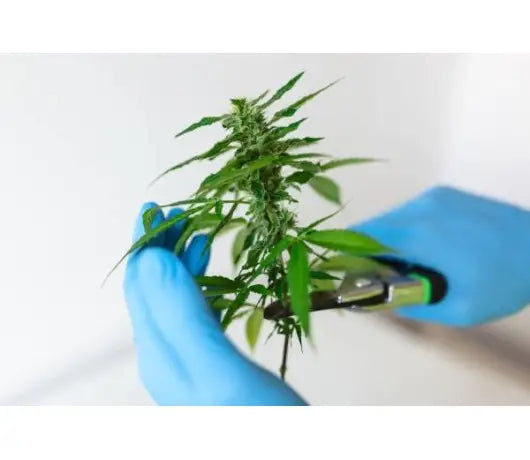
Pizzicato pruning is a little known technique in the world of cannabis culture, but it has great potential to stimulate growth and improve the structure of plants. Inspired by the musical term "Pizzicato," which refers to the technique of pinching the strings of an instrument to produce a special sound, this pruning implies tighten Certain branches of the cannabis plant to redirect your growth energy without causing significant damage. It is an especially useful technique for growers who seek to maximize the performance and structure of their plants without resorting to invasive pruning methods.
That is why in today's article, from Grow Industry, we tell you everything you should know about it.
What is Pizzicato pruning?
Pizzicato pruning is based on the idea of "pinch" the branches of the plant in a specific way to redirect its growth. Unlike traditional pruning techniques that require cutting or removing parts of the plant, pizzicato pruning is a handling technique that preserves the branches. This method focuses on slightly tightening a section of the branch until it softens, but without breaking it or causing open wounds. Over time, the plant will respond by strengthening that area and distributing energy to other areas, stimulating the development of secondary outbreaks and buds.
Unlike other pruning techniques such as toping or main-lineing, which imply direct cuts, pizzicato pruning is less invasive and cause less stress to the plant. This feature makes it an ideal option for growers who want to manipulate the structure of their plants without reducing their growth speed. In addition, pizzicato pruning allows better control over the direction of growth, without creating the "wounds" that can be a focus of stress or diseases.
One of the most prominent aspects of Pizzicato pruning is its ability to stimulate growth without causing a negative impact on the plant's life cycle. By applying pressure at specific points, growers can direct energy towards the desired branches, which not only allows more controlled growth, but also strengthens the branches, making the plant more resistant. This technique favors uniform development And it can increase the performance of plants, since the buds receive a better distribution of light and nutrients.
Pizzicato pruning benefits in cannabis cultivation
Promotion of stronger branches
Pizzicato pruning helps the plant branches strengthen, since the slight applied pressure encourages a natural swelling response in the affected areas. This makes the branches more resistant and less prone to break Under the weight of the buds in advanced flowering stages, which is ideal for plants with great production.
Best plant energy distribution
Thanks to this technique, plant energy can redirect and buds, instead of concentrating only on vertical growth. This balanced energy distribution facilitates that plants develop multiple branches uniformly, thus optimizing the production of flowers and buds throughout the plant.
Ideal for young plants
Pizzicato pruning is especially effective when applied in young plants that are in early development stages. During these first phases, the plant is more flexible and responds quickly to growth stimulation, which allows to obtain a more robust and uniform structure from the beginning of the life cycle.
How to perform pizzicato pruning correctly
To perform pizzicato pruning effectively, it is essential to understand how to apply the step by step. The process begins by selecting a branch of the plant and applying pressure with the fingers at a specific point. It is important to squeeze softly until you feel that the branch softens, but without breaking it. This ensures that the plant canalize its energy to strengthen that area without suffering severe damage that can slow down their growth. The key is to apply sufficient pressure to slightly fold the branch and, at the same time, allow it to continue receiving nutrients and water without interruptions.
When choosing the appropriate branches to apply pizzicato pruning, it is advisable to focus on those that are in strategic positions of the plant and that can help balance their structure. The main and secondary branches are usually the best candidates for this technique, since their manipulation allows better control over the development of the plant. It is important to observe the plant and carefully choose the areas that would benefit the most from this energy redistribution, especially if you are looking for Improve exposure to light and maximize performance in the culture space.
Tips for better results
To achieve the best results with pizzicato pruning, it is essential to practice the technique with caution and monitor the status of plants regularly. Be sure not to apply too much pressure in a single area, as this could cause damage instead of stimulating growth. The key is Learn to feel natural resistance of the plant and adjust the pressure as necessary. It is advisable to perform the technique during the day, when the plants are in their active phase of growth and response to stimuli.
Another important advice is to alternate the areas of application of the technique. You should not apply pizzicato pruning in all branches at the same time, since this could cause excessive stress in the plant. It is preferable to distribute the technique in different days and areas to allow the plant to recover and strengthen each part gradually and balanced.
Possible problems when pizzicato pruning
Damage due to excess pressure
One of the most common problems when applying pizzicato pruning is excess pressure, which can result in damaged or broken branches. This occurs when the applied force is superior to the resistance of the plant. To avoid this problem, it is essential to practice a Soft tight technique and stop as soon as the branch begins to give in.
Slow recovery
Some plants may show a slower recovery after pizzicato pruning, especially if they have received too much pressure or if the technique was applied excessively. Slow recovery signs include reduced growth and leaves that do not expand correctly. To help the plant, you can reduce irrigation and light exposure for a couple of days, allowing it to recover naturally.
Common errors
Among common mistakes when pizzicato pruning is the selection of inappropriate branches or the application in very young plants that still do not have enough strength. To avoid these errors, always select mature and firm branches and make sure the plant is in a good state of health before performing the technique. Patience and constant monitoring are essential for the success of this practice.
Pizzicato pruning is an innovative and less invasive technique that allows cultivators to manipulate the growth of their cannabis plants in a controlled and effective way. By learning to master this technique, you can achieve a more uniform and healthy development in your plants, which translates into higher quality crops.
In Grow Industry, we have all the necessary tools and products to perform this and many other cultivation techniques. Visit us in our physical stores in Reus and Vilafranca del Penedès Or consult our online store to discover everything you need to take your cultivation to the next level. Take advantage of this technique and experience with your plants to get the best results!