
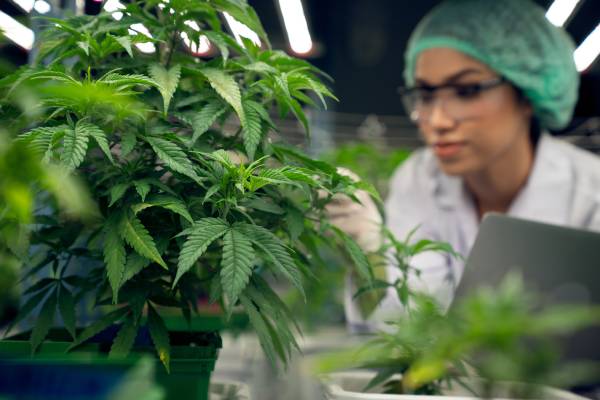
Marijuana cultivation has experienced significant advances in recent decades, not only in genetics and nutrition, but also in cultivation techniques. Among these advances, the use of carbon dioxide (CO2) has stood out as a crucial factor to enhance the growth and production of plants. The incorporation of CO2 in marijuana cultivation not only improves the photosynthesis rate, but can also result in more abundant and higher quality crops.
In Indoor culture environments, where environment control is essential, the optimization of CO2 levels is an advanced technique that can make a difference. In addition, the combination of the use of CO2 with LED lighting represents a perfect synergy, taking advantage of the energy efficiency and light intensity of LEDs to maximize the effects of CO2. This interaction between CO2 and LEDs is especially beneficial, since it allows cultivators to create a highly optimized environment that can lead to higher results in terms of growth and power of marijuana plants.

Why use CO2 in marijuana cultivation
Carbon dioxide (CO2) plays a vital role in the growth and development of marijuana plants, being an essential component in the photosynthesis process. This natural process is the way in which plants turn light, water and CO2 into oxygen and glucose, the latter being a vital energy source for growth and flowering.
In the context of marijuana cultivation, CO2 acquires even greater relevance. Cannabis plants, in particular, respond positively to high levels of CO2, which can result in faster growth, more robust stems and, most importantly, a significant increase in flower production, both in quantity and quality. By increasing the concentration of CO2 in the culture environment, the photosynthesis rate is accelerated, allowing plants to synthesize more sugars and grow faster.
In natural environments, CO2 concentration is usually sufficient for normal plant growth. However, in controlled environments such as Indoor crops, the addition of CO2 may be necessary to achieve optimal concentrations that drive more vigorous growth. This is especially true in sealed or low ventilation environments, where plants can quickly exhaust the CO2 available.
In addition, the efficient use of CO2 in marijuana cultivation must be accompanied by adequate lighting and balanced nutrition. Photosynthesis depends not only on CO2, but also on light, and plants can only use the additional CO2 if they have enough light for photosynthesize. Therefore, the use of CO2 in crops that use LED lighting is particularly effective, since these lights provide the intensity and spectrum of light necessary to maximize photosynthesis, without generating excess heat that accompanies other forms of lighting.
Use of CO2 for Indoor culture
In the Indoor of marijuana cultivation, the proper management of CO2 Indoor culture is essential to maximize the health and productivity of plants. In these controlled environments, the introduction of CO2 can have a significant impact on the growth and development of plants.
Importance of CO2 in controlled environments
- Growth acceleration: The supplementary CO2 can accelerate the growth of marijuana plants, as it increases the photosynthesis rate.
- Harvest quality and quantity improvement: An optimal level of CO2 can lead to an increase in the density and size of the buds.
- Environmental control: In an indoor crop, CO2 levels can be adjusted and maintained more effectively than in an outdoor environment.
CO2 regulation and monitoring tips in Indoor crops
- CO2 level monitoring: Use CO2 monitors to maintain a precise record of CO2 levels in the culture environment. Ideal levels are usually between 700 and 1500 ppm (parts per million).
- Adequate ventilation: Be sure to have an efficient ventilation system. Although plants need CO2, they also require fresh air and an adequate gas exchange.
- Timing and dosing: CO2 must be administered during the hours of light, since plants only use it for photosynthesis during this period. Avoid excess CO2, since it will not provide additional benefits and could be harmful.
- Security: Keep CO2 levels within a safe range for humans, especially in small or little ventilated spaces.
- Combination with other growth factors: Make sure other factors such as light, temperature, humidity and nutrients are also optimized, since CO2 is only part of the general cultivation system.

Cultivation combination with LED and CO2
The combination of LED lighting and supplementation with CO2 in Indoor marijuana crops represents an advanced synergy that can lead to exceptional results in terms of growth and production of plants. This combination takes advantage of the strengths of both technologies to optimize cultivation conditions.
How LED lighting complements the use of CO2 cultivation
- Energy efficiency and light spectrum: LEDs offer a light spectrum adjusted to the specific needs of marijuana plants, which promotes more efficient photosynthesis. This efficiency is enhanced with the additional CO2, which accelerates the photosynthetic process.
- Lower heat production: Unlike other light sources, LEDs generate less heat, which reduces stress in plants and allows easier environmental temperature. This is crucial, since high levels of CO2 require precise control of temperature and humidity.
- Adjustable luminous intensity: The ability to adjust the intensity of LEDs allows cultivators to simulate the natural conditions of sunlight more effectively, which translates into a better use of CO2.
Benefits of the combination of LED and CO2 for optimal growth
- Higher growth rate: The combination of optimal lighting with an enriched atmosphere with CO2 results in a faster and more vigorous growth of marijuana plants.
- Improved flowering: LEDs can be adjusted to promote flowering, and when combined with adequate CO2 levels, they can significantly improve the quantity and quality of the buds.
- Efficiency in the use of resources: This combination allows more efficient use of energy and resources, maximizing yields while minimizing energy consumption and operating costs.
- Controlled environment: The precise control over lighting and CO2 allows to create an almost ideal culture environment, resulting in healthier plants and greater resistance to diseases and pests.
CO2 generators cultivation
For marijuana growers who seek to maximize the efficiency and production of their indoor crops, CO2 generators are essential tools. These devices are designed to increase the concentration of CO2 marijuana in the culture environment, favoring faster growth and greater flower production. There are several types of CO2 generators available in the market, each with their specific characteristics.
Types of CO2 generators
- Gas generators: They work by burning propane or natural gas, releasing CO2 as a result of combustion. They are efficient for larger areas due to their high production capacity of CO2.
- Electric generators: These devices produce CO2 through chemical or physical processes, without combustion. They are more suitable for small or medium spaces and are easier to control.
- Liquid CO2 emission systems: They use liquid CO2 tanks that vaporize and release gas. These systems allow a very precise control of CO2 levels and are ideal for growers seeking maximum precision.
- Organic CO2 Kits: These kits use organic compounds that release CO2 gradually. They are a more ecological option, but offer less control and are more suitable for small crops.
How to choose the CO2 generator for cultivation
- Cultivation area size: Consider the size of your culture space. Gas generators are better for larger areas, while electric CO2 systems are more suitable for smaller spaces.
- Control and automation: Evaluate what control and automation level you need. Some systems allow integration with climate control systems, offering an automatic adjustment of CO2 levels.
- Budget: Keep your budget into account. Initial and operational costs vary significantly between different types of generators.
- Security: Make sure the chosen system has incorporated safety characteristics, especially if you opt for a gas generator.
- Ease of use and maintenance: Consider the ease of installation, use and maintenance. Some systems require more attention and technical knowledge than others.

Best practices and tips for efficient CO2 use in marijuana cultivation
The use of CO2 in marijuana cultivation can be highly beneficial, but requires careful practices and security considerations to ensure that it is both effective and safe. Next, some key recommendations and precautions to be taken into account are presented.
Recommendations for efficient CO2 use
- Constant monitoring: Use CO2 monitors to maintain a precise follow -up of the levels in your cultivation space. Keep CO2 levels between 700 and 1500 ppm for optimal growth.
- Adjustment according to the growth stage: Adapt the CO2 levels according to the growth stage of your plants. Flowering plants can benefit more than higher levels of CO2.
- Lighting and temperature optimization: Make sure the lighting and temperature are suitable for the use of CO2. Plants need sufficient light to use CO2 efficiently and an adequate temperature to optimize photosynthesis.
- Adequate ventilation: Ensure adequate ventilation in your culture space to avoid the accumulation of CO2 to dangerous levels and to provide fresh oxygen to plants.
Precautions and security considerations
- Avoid overexposure to CO2: High levels of CO2 can be dangerous for humans. Be sure not to enter the cultivation area when CO2 levels are high or use respiratory protection equipment if necessary.
- CO2 detection equipment: Install marijuana CO2 detectors to alert you on dangerously high levels.
- Safety in the use of CO2 generators: If you use gas CO2 generators, make sure they are correctly installed and maintained to prevent fire risks or carbon monoxide poisoning.
- Knowledge of CO2 limits: Keep in mind that increasing CO2 levels beyond a certain point will not provide additional benefits and could damage your plants.

Homemade CO2 for marijuana cultivation
Generating CO2 home is a popular option among marijuana growers that seek to improve the growth of their plants without incurring the significant spending of commercial systems. Next, we will explore some homemade methods and their pros and cons.
Homemade Methods to generate CO2
- Sugar and yeast fermentation: One of the most common ways to generate homemade CO2 marijuana is by fermentation of sugar with yeast. This method consists of mixing sugar, water and yeast in a container, which begins a fermentation process that releases CO2. CO2 production can be controlled by adjusting the proportions of the ingredients.
- Sodium bicarbonate and citric acid: Another method implies the chemical reaction between sodium bicarbonate and an acid such as citric acid or vinegar, which produces CO2 when mixing. This reaction is faster and less predictable than sugar and yeast fermentation.
Advantages of CO2 Home Marijuana
- Cost-effectiveness: Generating homemade CO2 is considerably cheaper than buying commercial systems.
- Ease of implementation: Homemade methods are relatively easy to configure with materials that are usually available at home or can be easily acquired.
- Educational Control: Experiment with CO2 generation can provide a valuable learning experience on the impact of CO2 on marijuana cultivation.
Disadvantages of homemade CO2
- Limited control: The home generation of CO2 offers limited control over CO2 levels, which can result in inconsistencies in the CO2 concentration in the culture environment.
- Continuous maintenance: Homemade CO2 systems require constant attention and maintenance to ensure continuous production.
- Overproduction or deficiency risk: Without adequate monitoring, there is a risk of producing too much CO2, which can be harmful to plants, or not produce enough, which reduces their effectiveness.