
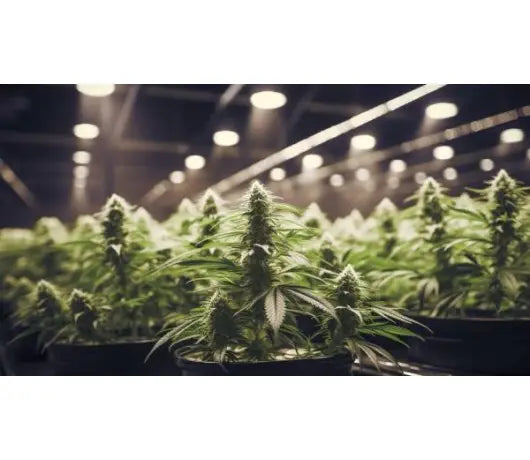
In a world where agricultural innovation is constantly evolving, vertical hydroponic culture emerges as a revolutionary technique, especially in the cannabis industry. This methodology combines the efficiency of hydroponic crop - a system where plants grow without soil, nourishing mineral solutions dissolved in water - with a vertical disposition, optimizing space and resources.
In vertical hydroponic crop, cannabis plants are located in towers or overlapping shelves, which allows more space to be cultivated. This technique is not only an advance for those with spatial limitations, but also represents a leap towards sustainability and efficiency. Vertical hydroponics significantly reduce water and nutrient consumption compared to traditional land cultivation methods, and at the same time, maximize production by allowing greater control over the growth environment.
In the cannabis industry, where quality and consistency are crucial, vertical hydroponic culture offers an unprecedented solution. It allows culture cultivators to adjust nutrients, lighting and temperature, factors that are essential to produce high quality cannabis. In addition, this technique adapts perfectly to urban environments or areas where agricultural land is scarce or not suitable for agriculture.

What is the Hydroponic culture Vertical?
Vertical hydroponic culture is an innovative agricultural technique that combines two key concepts: hydroponics and Vertical culture. Hydropony is a groundless plant culture method, where The roots are submerged directly into a nutritious solution rich in minerals, providing plants with everything necessary for their growth. This technique eliminates the need for land, allowing more precise control over nutrients and water that plants receive.
The "vertical" aspect of this system implies Horizontally stack plants at multiple levels or layers. This provision optimizes the use of space, which is especially beneficial in urban areas or in places with space limitations. In vertical hydroponic culture, plants can grow in towers, walls or shelves, taking full advantage of the available height.
Advantages of vertical hydroponic culture in cannabis
The vertical hydroponic culture in cannabis offers a series of significant advantages that are transforming the way this plant is cultivated. These advantages not only benefit cultivators in terms of efficiency and performance, but also contribute to more sustainable and environmentally respectful practices.
- Efficient space: When growing plants at multiple levels, vertical hydroponic culture maximizes production in a minimum area. This is ideal for urban environments or for growers that have limited space.
- Water and nutrient savings: Hydroponics allows water and nutrients to recirculate, significantly reducing the consumption of both. This contrasts with the cultivation on land, where water and nutrients can be easily lost.
- Environmental control: Not depending on the soil, vertical hydroponic systems allow more rigorous control over growth conditions, including moisture, temperature, light and nutrition. This control is more difficult to achieve in traditional agriculture.
- Reduction of pests and diseases: Being in a controlled and without soil environment, there is less risk of pests and soil diseases in vertical hydroponic systems. In contrast, traditional land crops are more susceptible to these problems.
- Cultivation: Vertical hydroponic systems can be operated indoors, allowing production throughout the year, regardless of external climatic conditions. This is a considerable advantage over traditional agriculture, which is subject to stations and climate.

Vertical hydroponic culture system components
Vertical hydroponic culture in cannabis is an intricately designed system that integrates several key components. Each of these elements plays a crucial role in the success of the crop, ensuring optimal and sustainable growth of plants. The most important components are described below:
Hydroponic culture systems Vertical
- The Irrigation systems In vertical hydroponics they are designed to supply a nutrient solution directly to plants' roots.
- These systems can vary from simple drip systems to more advanced methods such as airland, where roots are suspended in the air and sprinkle with the nutrient solution.
- Water use efficiency is key, and these systems often recirculate water to minimize waste.
Nutritional solutions
- The nutritious solution is fundamental in any hydroponic system. It contains all essential minerals and nutrients that plants would normally get from the ground.
- The composition of this solution is carefully adjusted to meet the specific needs of cannabis at different stages of its life cycle.
- A precise balance of macronutrients (such as nitrogen, phosphorus and potassium) and micronutrients is crucial for healthy growth and optimal production.
Lightning Artificial
- In vertical hydroponic culture systems, especially indoors, artificial lighting is essential to provide the energy necessary for photosynthesis.
- LED lights are the most used due to their energy efficiency, their ability to emit specific light spectra, and their low heat emission.
- The intensity and spectrum of light can be adjusted according to the phases of growth of plants, from germination to flowering.
Vertical supports and structures
- Support structures are essential to keep plants in their vertical disposal. These may include shelves, towers or panels.
- These structures must be robust enough to sustain the weight of plants and the irrigation system, and at the same time allow adequate access to maintenance.
Technology and automation
- Automation plays a fundamental role in vertical hydroponic systems, allowing precise and constant control over the environment.
- The sensors can monitor and adjust variables such as moisture, temperature, pH levels and electrical conductivity of the nutrient solution.
- Automated climate control, irrigation and food systems reduce the need for manual intervention and ensure the consistency and efficiency of the process.
Ventilation systems and Climate control
- Adequate ventilation is crucial to maintain the optimal environment for the growth of cannabis plants.
- These systems help control temperature and humidity, and eliminate excess heat generated by artificial lighting.

Challenges and considerations in the vertical hydroponic culture of cannabis
Although vertical hydroponic culture offers numerous advantages for cannabis cultivation, it also presents specific challenges and considerations that must be addressed to guarantee the success and sustainability of the system. These include:
Management of Pests and diseases in marijuana
- Although the risk of pests and soil diseases is reduced in hydroponic systems, challenges related to air and pathogens can still occur.
- Planting density in vertical systems can facilitate rapid spread of pests and diseases if they are not properly controlled.
- It is essential to implement a rigorous integrated pest management program, which may include the use of biological controls, strict hygiene practices and, in some cases, approved pesticides.
Specific nutrient requirements for cannabis
- Cannabis has unique nutritional needs that vary throughout its life cycle. The formulation of the nutritious solution must be carefully adjusted to meet these needs.
- An incorrect balance of nutrients can lead to deficiencies or toxicities, affecting the health and performance of plants.
- Constant monitoring of the nutrient solution is required, including pH and electrical conductivity, to ensure that plants receive adequate nutrition at each stage of their development.
Initial investment and operating costs
- The implementation of a vertical hydroponic culture system requires a significant initial investment. This includes costs associated with infrastructure, such as lighting, irrigation, climate control and automation systems.
- Although these systems are more efficient in the long term, initial operating costs can be an obstacle, especially for small or beginner growers.
- In addition, energy costs associated with lighting, climate control and other automated systems can be substantial, so it is important to consider energy efficiency solutions and renewable energy sources.
Technical Management and Specialized Knowledge
- Vertical hydroponic culture is technically more complex than traditional culture methods. It requires detailed knowledge of hydroponics, cannabis botany, and automated systems management.
- Continuous training and skills development are crucial for personnel working in these systems, to ensure that technology can effectively handle and respond to the problems that arise.
Environmental sustainability and energy efficiency
- Despite its benefits in terms of efficiency of water and space use, vertical hydroponic systems can have a large carbon footprint due to intensive energy use.
- It is important to consider practices and technologies that minimize the environmental impact, such as the use of renewable energy, the optimization of energy efficiency and the reduction of the waste of resources.