
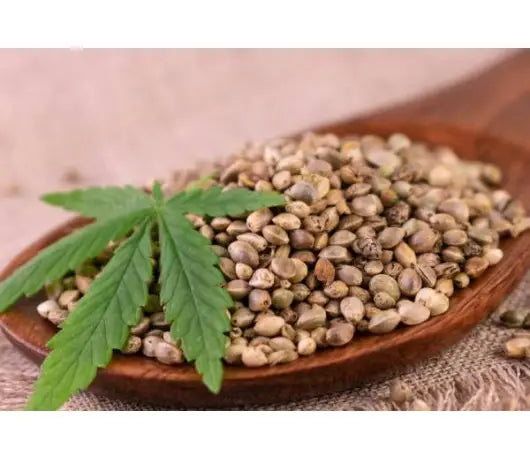
In the fascinating world of cannabis culture, seed generations, known as F1, F2 and F3, play a crucial role in the evolution and improvement of strains. These terms, which may seem taken from a genetic book, are actually fundamental to understand how cannabis breeders develop new varieties with desirable characteristics.
F1 seeds represent the first generation of descendants of two different parental strains, offering a unique combination of characteristics. These seeds are valued by their vigor and uniformity, being a pillar in the creation of hybrid seeds F1. On the other hand, generations F2 and F3 derive from self-pollinization or crossing F1 plants, introducing greater variability and opportunities to select specific features.
Understanding these generations is essential for breeders who seek to develop new strains with qualities such as greater resistance, better taste profiles or specific effects. For growers, choosing between seeds F1, F2 or F3 can significantly influence the result of their harvest, from genetic stability to the diversity of plants.

Types of marijuana seeds and their classification in F1, F2, F3
The classification of marijuana seeds in generations F1, F2 and F3 is a crucial aspect in the understanding of their genetics and behavior. This classification has a direct impact on the selection of seeds and cultivation strategies.
F1 seeds
F1 seeds are the first generation of offspring resulting from the crossing between two pure or stabilized parental strains in cannabis cultivation. These seeds are fundamental in the breeding and development of new cannabis varieties, offering unique characteristics:
- Hybrid vigor: They exhibit more robust and healthy growth compared to their parents, resulting in stronger plants with greater resistance to diseases and potentially greater returns.
- Uniformity in crop: F1 plants grow consistently in terms of height, flowering time and other phenotypic features, facilitating crop planning and management.
- Genetic potential: They contain latent genetic diversity, allowing breeders to select and stabilize desired features in future generations.
- Development of new strains: Essential to combine desirable characteristics of two different strains, opening the way for the creation of new varieties with specific attributes.
- Base for the selection of features: They are the starting point to identify and select specific features in later generations, facilitating the improvement and stabilization of strains.
- Ideal for commercial and personal growers: Due to its predictable growth and consistent yields, they are a popular option in both commercial and personal crops.
- Experimentation opportunities: For growers interested in experimenting with new combinations of strains, F1 seeds offer an exciting opportunity to explore new possibilities in cannabis cultivation.
F1 seeds are fundamental in the cannabis world, offering a unique combination of vigor, uniformity and potential for innovation and development in cannabis breeding.
Seeds f2
F2 seeds are the second generation in cannabis breeding, obtained by crossing two plants from the F1 generation with each other. This generation is crucial for breeders and growers for several reasons:
- Greater genetic variability: Unlike F1 seeds, F2 have greater genetic diversity. This means that the resulting plants can show a wide range of characteristics, some of which can be new or different from those of generation F1.
- OPPORTUNITIES FOR THE SELECTION OF TRAVES: Variability in F2 seeds offers breeders the opportunity to select specific features to develop or stabilize in future generations. This is essential for the continuous improvement of cannabis strains.
- Challenges in consistency: Due to their genetic diversity, F2 plants can be less predictable in terms of growth and production compared to F1. This can represent a challenge for growers seeking uniformity in their crops.
- Importance in long -term breeding: F2 seeds are an important step in the long -term breeding process, since they allow breeders to refine and set desirable characteristics in cannabis strains.
- Experimentation and discovery: For growers and breeders who enjoy experimentation, seeds F2 offer an exciting opportunity to explore genetic diversity and discover new combinations of features.
F2 seeds are fundamental in the cannabis world, providing a platform for genetic diversification and innovation in cannabis breeding.
F3 and subsequent seeds
F3 seeds and successive generations in cannabis cultivation represent advanced stages in the breeding and selection of strains. These generations are crucial for breeders seeking to stabilize and perfect specific features in their cannabis strains.
- Refinement and stabilization of features: From generation F3, the approach focuses on the refinement and stabilization of specific features. This is achieved through the careful selection of plants within the F2 generation that shows the desired characteristics.
- Reduced genetic diversity: As we move from F3 to F4, F5 and beyond, genetic diversity tends to decrease, and plants show greater uniformity in terms of the selected features.
- Selection and stabilization: Each successive generation allows breeders to select more precisely and stabilize the desired features, approaching a "true strain for the type" with consistent attributes.
- Importance in long -term breeding: These generations are essential for breeders seeking to develop a strain with very specific and consistent characteristics. Each successive generation allows a more precise selection and greater genetic stability.
- Challenges and opportunities: Although subsequent generations offer the opportunity to stabilize traits, they also present the challenge of maintaining vitality and avoiding excessive consanguinity, which can lead to a decrease in vigority and general health of plants.
- Use in specialized crops: F3 and subsequent seeds are particularly valuable for specialized growers seeking very specific features, such as particular cannabinoid profiles, resistance to diseases or adaptations to unique cultivation conditions.
F3 and subsequent seeds play a vital role in the evolution and development of cannabis strains, allowing breeders and cultivators to reach specialization and refinement levels that are not possible in the first generations.
Advantages of seeds F1, F2, F3, etc.
The different generations of cannabis seeds, F1, F2, F3 and beyond, offer a series of unique advantages in the cultivation and breeding of cannabis:
- Hybrid vigor: First generation seeds (F1) show robust growth and higher health, resulting in stronger and stronger plants.
- Uniformity in crop: F1 seeds provide remarkable uniformity in plants characteristics, ideal for predictable results.
- Innovation in breeding: F1 seeds are essential to combine desirable characteristics of two parental strains and develop new varieties.
- Greater genetic variability: The seeds of the second generation (F2) offer greater genetic diversity, allowing the selection and stabilization of specific features.
- Selection opportunities: F2 seeds are ideal for the selection and improvement of specific characteristics in future generations.
- Genetic exploration: F2 seeds allow you to experiment with a broader range of characteristics and effects.
- Training refinement: From the third generation (F3), greater refinement and stabilization of specific features are allowed.
- Consistency in plants: F3 and subsequent generations provide greater uniformity and predictability in the characteristics of the plants.
- Development of specialized strains: F3 and subsequent generations are ideal for the development of strains with very specific and consistent characteristics.
Each generation of seeds, from F1 to F3 and beyond, plays a crucial role in cannabis cultivation, offering different advantages that can be used to achieve specific objectives in breeding and crop.

Seed cultivation F1, F2, F3 and later
The cultivation of different generations of cannabis seeds, such as F1, F2, F3 and beyond, requires specific approaches and considerations to maximize its potential and take advantage of its unique characteristics.
F1 seed cultivation
The cultivation of F1 seeds in the cannabis world implies making the most of its hybrid vigor and uniformity. These seeds, being the first generation of a cross between two pure or stabilized parental strains, offer unique characteristics that are beneficial for growers. Key considerations for crop of seeds F1:
- Stable culture environment: F1 seeds benefit from a controlled and stable culture environment. This includes optimal conditions of light, temperature and humidity to ensure uniform and healthy growth.
- Consistent growth expectations: Due to their genetic uniformity, F1 plants tend to grow consistently in terms of size, flowering time and performance. This facilitates crop planning and management.
- Nutrient management and irrigation: Although F1 seeds are generally robust, it is crucial to provide adequate nutrient and irrigation management to maximize their potential. An adequate balance of macronutrients and micronutrients is essential.
- Prevention Diseases and pests in marijuana: Despite its vigor, it is important to implement disease prevention practices and pests to maintain the health of plants F1.
- Harvest and post-harvest: F1 plants usually have predictable flowering time, which facilitates harvest planning. During the post-harvest, it is important to maintain adequate drying and cured conditions to preserve the quality of the buds.
F1 seed cultivation is an excellent option for growers seeking to combine cultivation ease with high quality and consistent results.
F2 seed cultivation
F2 seed cultivation in the cannabis world presents a different dynamic compared to F1 seeds. These seeds are the second generation, obtained by crossing two F1 floors, and offer greater genetic variability. Key considerations for crop of seeds F2:
- Preparation for genetic variability: F2 seeds have greater diversity in their genetic characteristics. This means that cultivators can expect a broader range of phenotypes in terms of growth, power, taste and resistance to diseases.
- Selection and stabilization of features: F2 cultivation is ideal for those interested in selecting and stabilizing specific features. Cultivators can identify and select plants with the desired characteristics for future generations.
- Adaptive management: Due to the variability, it is crucial to adapt the management of the crop to the specific needs of each plant. This includes adjustments in irrigation, nutrition and control of pests and diseases.
- Careful monitoring: Detailed monitoring is essential to identify variations between plants and select the most appropriate for breeding or production objectives.
- Diversification opportunities: F2 seeds offer the opportunity to explore broader genetic diversity, which can result in the identification of unique and desirable phenotypes.
- Potential for personalized breeding: They are ideal for breeders seeking to develop personalized strains, since they allow a more detailed selection of specific features.
- Discovery of new combinations: F2 cultivation can lead to unique genetic combinations discovery, potentially resulting in new strains with unusual or improved characteristics.
F2 seed cultivation is an exciting adventure for cannabis growers and breeders, offering the possibility of exploring and selecting genetic diversity that is not present in F1 seeds.
F3 seed cultivation and following generations
The crop of seeds of the third generation (F3) and beyond in the world of cannabis focuses on the stabilization and improvement of specific features. These generations are key to breeders seeking to consolidate characteristics such as cannabinoid profiles, resistance to diseases or growth patterns. Key considerations for crop of seeds F3:
- Rigorous seed selection: Choose F3 seeds and later based on the desired expression of specific features and the genetic history of parental plants F1 and F2.
- Controlled culture environment: Maintain stable and controlled conditions of light, temperature and humidity to favor the consistent expression of features.
- Detailed monitoring and documentation: Carry out careful growth and development, documenting variations in phenotypic features and characteristics.
- Continuous evaluation during the culture cycle: Look at plants in vegetative and flowering phases to identify desired phenotypes and consider the cloning of exceptional plants.
- Harvest and post-harvest analysis: Determine the optimal harvest moment based on the maturity of trichomes and pistils, and evaluate the quality of flowers in terms of power, flavor and effects.
F3 seed cultivation and subsequent generations is a meticulous process that allows cultivators and breeders to reach advanced levels of specialization and refinement. Through a careful selection and adaptive management, these advanced seed generations open the door to the creation of highly specialized and consistent cannabis strains.
Comparison of seeds F1, F2, F3 and later with others Types of marijuana seeds
In cannabis cultivation, successive generations of seeds, such as F1, F2, F3 and subsequent, present unique characteristics that distinguish them from other types of marijuana seeds. These differences are essential to understand the specific role of each type of seed in the breeding and cannabis cultivation.
- The first generations, such as F1, usually show hybrid vigor and uniformity, while subsequent generations focus more on the stabilization and refinement of specific features.
- Unlike seeds that produce a mixture of male and female plants, advanced generations tend to have a greater consistency in terms of genetic features.
- While some seeds are designed for rapid culture cycles, advanced generations focus on the stability and consistency of features throughout generations.
- Unlike seeds that bloom automatically without depending on the light cycle, advanced generations may require specific light cycles for flowering and focus on the stabilization of genetic features.
- Unlike the seeds that come from strains that have naturally evolved in specific environments, advanced generations are the result of a selective and controlled breeding process.
- While some seeds are specifically raised to produce high levels of a particular cannabinoid, advanced generations can focus on a variety of features, including cannabinoid profiles.
- Unlike the seeds selected for their resistance to adverse conditions, advanced generations may or may not have resistance characteristics, depending on the selected features to stabilize.
Each type of cannabis seed provides its own advantages and challenges, and successive generations of seeds F offer unique opportunities for stabilization and improvement of specific features in cannabis strains.
.jpg)
Seeds F1, F2, F3 and later vs. Regular seeds
The comparison between successive generations of seeds F (F1, F2, F3 and posterior) and regular seeds highlights fundamental differences in terms of genetics, predictability and cultivation purposes.
- Genetic stability: The seeds F1, F2, F3 and later are the result of a selective breeding process, with an approach to the stabilization and improvement of specific features. Regular seeds, on the other hand, produce a mixture of male and female plants and can have greater genetic variability.
- Predictability in traits: F1 seeds offer hybrid and uniformity vigor, while F2, F3 and subsequent focus on trait stabilization. Regular seeds may not offer the same level of predictability in specific features.
- Selection and continuous improvement: Successive generations of seeds F allow a selection and continuous improvement of desired features. Instead, regular seeds may require a more extensive selection process to identify and isolate specific features.
- Use in breeding and cultivation: Seeds F1, F2, F3 and later are ideal for breeders and growers seeking to develop strains with specific and consistent characteristics. Regular seeds are often preferred by those who seek greater genetic diversity or who are interested in breeding and creation of new strains.
- Flexibility in breeding: Regular seeds offer the possibility of obtaining both male and female plants, which is essential for the breeding and development of new genetic lines. F seeds, especially in later generations, are more oriented towards the stabilization of existing lines.
In summary, while the seeds F1, F2, F3 and subsequent are designed for the specific stabilization and improvement of features, the regular seeds offer greater genetic diversity and are fundamental for the breeding and development of new cannabis strains.
Seeds F1, F2, F3 and later vs. Hybrid seeds
The comparison between successive generations of seeds F (F1, F2, F3 and posterior) and hybrid seeds highlights key differences in the breeding and cannabis cultivation.
- Hybrid vigor vs. Stabilization of features: Hybrid seeds, especially F1, are known for their hybrid vigor, the result of the crossing of two different parental strains. On the other hand, generations F2, F3 and later focus on the stabilization and improvement of specific features inherited from the previous generations.
- Uniformity and consistency: F1 seeds offer high uniformity and consistency in their features, which is a desired characteristic of hybrid seeds. F2 and F3, although they seek to stabilize traits, may have greater variability compared to F1.
- Selection and breeding process: F1 hybrid seeds are the starting point for many breeding programs, providing a unique combination of features. F2 and F3 generations imply a more detailed selection process to stabilize and improve specific features.
- Genetic diversity: Hybrid seeds can offer a wide range of phenotypes, especially in F1 generation. F2 and subsequent generations, although they still have variability, tend to move towards greater predictability and stability in the features.
- Cultivation and breeding objectives: Hybrid seeds are ideal for growers and breeders seeking to combine the best qualities of different strains. Generations F2, F3 and later are more suitable for those who seek to refine and consolidate specific features in a strain.
In summary, while hybrid seeds, especially F1, are valued by their vigor and the unique combination of features, generations F2, F3 and later focus on the stabilization and refinement of specific characteristics within a genetic line.
Seeds F1, F2, F3 and later vs. Fast version seeds
The comparison between successive generations of seeds F (F1, F2, F3 and posterior) and Fast Version seeds highlights important differences in their development, characteristics and purposes in cannabis cultivation.
- Cultivation cycles: Fast version seeds are specifically designed to have faster crop cycles, which is ideal for growers seeking a rapid crop rotation. In contrast, generations F1, F2, F3 and subsequent are not specifically oriented to speed, but rather to the stabilization and improvement of specific genetic features throughout successive generations.
- Stabilization of features: While Fast Version seeds can offer advantages in terms of speed and sometimes resistance, generations F1, F2, F3 and subsequent focus on the stabilization of specific features, such as flavor profiles, power or resistance to diseases and pests.
- Breeding objectives: Fast version seeds are ideal for situations where time is a critical factor. On the other hand, successive generations of seeds F are more suitable for breeding programs that seek to develop and perfect specific features in a cannabis strain.
- Genetic variability: F1 seeds usually show greater uniformity and hybrid vigor, while F2 and F3 may have greater genetic variability. Fast version seeds, depending on their genetic origin, can vary in terms of uniformity and stability of features.
- Flexibility in crop: Fast version seeds offer flexibility in terms of shorter crop cycles, which can be beneficial in climates with limited growth seasons. Generations F1, F2, F3 and subsequent require a more detailed approach and often a longer crop period to achieve the desired stabilization of features.
In summary, while Fast Version seeds are valued by their speed and efficiency in the culture cycle, successive generations of F seeds focus on the improvement and stabilization of specific characteristics, offering the breeders the opportunity to refine and consolidate desired features in their cannabis strains.
Seeds F1, F2, F3 and later vs. Self -floring seeds
The differences between the successive generations of seeds F (F1, F2, F3 and posterior) and the self -confloring seeds are significant and affect both the culture strategy and the final results.
- Flowering cycle: The most distinctive characteristic of self -floring seeds is their ability to bloom automatically without depending on the light cycle. In contrast, generations F1, F2, F3 and subsequent generally require a change in the light cycle to induce flowering, unless they are crosses with self -confloring varieties.
- Stabilization of features: The seeds F1, F2, F3 and later focus on the stabilization and improvement of specific features throughout successive generations. Self -floring seeds, although they may have stabilized features, are usually valued mainly by their automatic flowering pattern.
- Culture time: Self -floring seeds usually have a shorter life cycle, allowing growers to obtain faster crops. Successive generations of seeds F can have longer life cycles, depending on the specific features that are being stabilized.
- Flexibility and adaptability: Self -floring seeds are ideal for cultivators with limited space or seeking quick and continuous crops. Generations F1, F2, F3 and subsequent are more suitable for long -term breeding programs and for cultivators interested in developing specific traits.
- Breeding objectives: While self -confloring seeds are specifically raised for automatic flowering capacity, generations F1, F2, F3 and subsequent are selected to refine and consolidate characteristics such as power, flavor profiles, disease resistance and other desired features.
In summary, self -confloring seeds offer advantages in terms of simplicity and speed of culture, while successive generations of seeds F offer opportunities for stabilization and detailed improvement of specific features in cannabis strains.

Seeds F1, F2, F3 and later vs. Feminized seeds
The comparison between successive generations of seeds F (F1, F2, F3 and posterior) and feminized seeds highlights important differences in breeding and cannabis cultivation.
- Women's GUARANTEE: The main characteristic of feminized seeds is that they are raised to ensure that almost all plants are female. In contrast, generations F1, F2, F3 and subsequent do not offer this guarantee unless they have been raised as feminized.
- Stabilization of features vs. Flower production: While feminized seeds focus on producing plants that will bloom (since they are female), generations F1, F2, F3 and subsequent focus on the stabilization and improvement of specific features, such as power, flavor profiles or resistance to disease.
- Genetic variability: F1 seeds usually show hybrid vigor and uniformity, while F2 and F3 may have greater genetic variability. Feminized seeds, regardless of their generation, tend to be more uniform in their sex, but may vary in other features.
- Cultivation objectives: Feminized seeds are ideal for growers who want to avoid male plants and focus on flowers. Generations F1, F2, F3 and later are more suitable for breeding programs that seek to develop and perfect specific features in a strain.
- Use in breeding and cultivation: Feminized seeds are often the choice for growers seeking simplicity and efficiency, while generations F1, F2, F3 and subsequent are chosen by breeders and growers interested in the stabilization and improvement of specific characteristics throughout generations.
In summary, while feminized seeds offer the advantage of producing female plants and avoiding unwanted pollination, successive generations of F seeds focus on the improvement and stabilization of specific characteristics, offering breeders the opportunity to refine and consolidate desired features in their cannabis strains.
Seeds F1, F2, F3 and later vs. Landrace seeds
The comparison between successive generations of seeds F (F1, F2, F3 and posterior) and Landrace seeds reveals key differences in the breeding and cannabis cultivation.
- ORIGIN AND GENETIC PURITY: Landrace seeds come from cannabis strains that have naturally evolved in specific environments for many years, which gives them a unique genetic purity. In contrast, generations F1, F2, F3 and subsequent are the result of controlled and selective breeding processes, seeking to combine or stabilize specific features of different strains.
- Stabilization of features: While Landrace seeds represent stable and non -modified genetic lines, generations F1, F2, F3 and subsequent focus on the stabilization and improvement of specific features, often combining characteristics of multiple strains.
- Genetic diversity: Landrace seeds usually have less genetic diversity compared to F1 seeds, which are hybrids of two different strains. Generations F2 and F3 may have greater genetic variability, but with an approach to the stabilization of certain features.
- Adaptability and resistance: Landrace seeds are usually well adapted to their local environments and can show natural resistance to certain diseases and pests. Generations F1, F2, F3 and subsequent may require more controlled and specific cultivation conditions.
- Use in breeding and cultivation: Landrace seeds are valued by their uniqueness and are often used as a basis for new crosses in breeding programs. Generations F1, F2, F3 and later are more common in breeding programs that seek to develop strains with specific and consistent characteristics.
In summary, while Landrace seeds offer a window to cannabis strains in their purest form and adapted to specific environments, successive generations of seeds F provide a platform for innovation and development of new strains with specific and improved features.
Seeds F1, F2, F3 and later vs. CBD seeds
The comparison between successive generations of seeds F (F1, F2, F3 and posterior) and CBD seeds reveals important differences in cannabis breeding and cultivation, especially with regard to cannabinoid profiles and breeding objectives.
- Focus on cannabinoids: CBD seeds are specifically raised to produce high levels of cannabidiol (CBD), a non -psychoactive cannabinoid known for their therapeutic properties. In contrast, generations F1, F2, F3 and later can focus on a variety of features, including but not limited to cannabinoid profiles.
- Stabilization of features: While CBD seeds focus on maximizing a specific cannabinoid, generations F1, F2, F3 and later focus on stabilization and improvement of a wider range of features, such as power, taste, resistance to diseases and flowering time.
- Genetic diversity: F1 seeds usually show hybrid vigor and uniformity, while F2 and F3 may have greater genetic variability. CBD seeds, depending on their genetic origin, may vary in terms of uniformity and features stability.
- Cultivation objectives: CBD seeds are ideal for growers seeking to produce cannabis for therapeutic purposes or for users who prefer the effects of CBD. Generations F1, F2, F3 and later are more suitable for breeding programs that seek to develop and perfect specific features in a strain.
- Flexibility in breeding: CBD seeds offer less flexibility in terms of features to select and stabilize compared to generations F1, F2, F3 and subsequent, which allow breeders to work in a broader range of characteristics.
In summary, while CBD seeds are specifically oriented to the production of high levels of CBD, successive generations of F seeds offer a broader platform for innovation and the development of strains with a variety of desired and improved features.
Seeds F1, F2, F3 and later vs. High strength seeds
The comparison between successive generations of seeds F (F1, F2, F3 and posterior) and high strength seeds reveals key differences in cannabis breeding and cultivation, especially with regard to resistance to adverse conditions and breeding objectives.
- Resistance to adverse conditions: High strength seeds are specifically raised to support adverse environmental conditions, such as extreme climates, pests and diseases. In contrast, generations F1, F2, F3 and subsequent may not have this specific resistance as its main characteristic, unless the resistance is one of the selected features for stabilization.
- Stabilization of diverse features: While high strength seeds focus on durability and survival in difficult conditions, generations F1, F2, F3 and later focus on stabilization and improvement of a broader range of features, such as power, flavor profiles, flowering time and disease resistance.
- Genetic diversity and adaptability: F1 seeds usually show hybrid vigor and uniformity, while F2 and F3 may have greater genetic variability. High strength seeds, depending on their genetic origin, may vary in terms of uniformity and adaptability to different cultivation environments.
- Cultivation objectives: High strength seeds are ideal for growers in regions with extreme climatic conditions or pest and disease problems. Generations F1, F2, F3 and later are more suitable for breeding programs that seek to develop and perfect specific features in a strain.
- Flexibility in breeding and cultivation: High strength seeds offer specific advantages in terms of survival and performance in difficult conditions, while successive generations of F seeds allow breeders to work in a broader range of characteristics and adapt the strains to a variety of cultivation environments.
In summary, while high resistance seeds are specifically oriented to survival and performance in adverse conditions, successive generations of seeds F offer a broader platform for innovation and the development of strains with a variety of desired and improved features.

Situations and objectives to choose seeds from successive generations F (F1, F2, F3)
The choice of seeds of successive generations F (F1, F2, F3) in cannabis cultivation depends on the specific objectives, the experience of the cultivator and the needs of the breeding project. Each generation offers unique characteristics that are beneficial in different cultivation and breeding contexts.
- F1 seeds for uniform and fast cultivation: Ideal for predictable and consistent results, hybrid vigor and uniformity; Perfect for large -scale commercial production.
- F2 seeds for experimentation and genetic selection: Appropriate for the selection and stabilization of specific features, offering greater genetic variability; Ideal for the development of personalized strains.
- F3 seeds for stabilization of specific features: Useful to consolidate and stabilize specific features in a strain; Ideal for long -term breeding programs and strains cultivation with specific characteristics.
- Beginner growers: They can prefer F1 seeds for their ease of crop and predictable results.
- Experienced cultivators: They opt for F2 and F3 seeds for more complex breeding challenges and development of unique strains.
- Commercial cultivators: They choose F1 seeds for uniform and high quality production; F2 and F3 are selected for specific breeding projects.
The selection of seeds F1, F2 or F3 must align with the cultivation and breeding objectives of the grower. While F1 are ideal for rapid and uniform results, F2 and F3 offer opportunities for genetic experimentation and stabilization of specific features. The proper choice allows growers and breeders to maximize the potential of their crops and achieve their breeding objectives effectively.