

The red spider plague is one of the pests and diseases in marijuana, it is a tiny but formidable adversary, a notorious reputation in the world of cannabis cultivation has been gained. These tiny mites, barely visible to the naked eye, are capable of wreaking havoc on the plants, sucking their sap and leaving behind a trace of mottled and weakened leaves. Their presence not only reduces the health of plants, but can also compromise the quality and performance of the crop, making them a pest feared by rookie and expert growers equally.
However, as with many aspects of cannabis cultivation, knowledge and understanding can be powerful tools. In this case, understanding how temperature influences the life and proliferation of the red spider is crucial. These mites are surprisingly sensitive to temperature variations, and this is where growers can have a significant advantage. Adjusting the temperature can be an effective strategy to prevent or control an infestation. Therefore, it is essential to know what temperature the red spider dies, thus allowing growers to take preventive or corrective measures to protect their precious cannabis plants from this common and destructive plague.
What is the red spider?
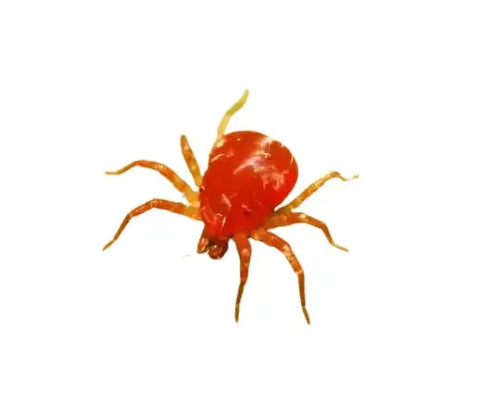
The red spider, scientifically known as Tetranychus Urticae, is a tiny mite that often goes unnoticed until the damage to cannabis plants becomes evident. These organisms, which are not true spiders but mites, are infamous because of their ability to proliferate rapidly in favorable conditions. Typically, they have a color that varies between red and orange, and measure less than 1 mm, which makes their early detection a challenge.
These mites are fed by drilling plants cells to suck their content, resulting in the characteristic mottled or yellowish discoloration of the leaves. In severe cases, the leaves can become completely yellow, dry and fall. A red spider infestation not only affects the aesthetics of the plant, but can also significantly reduce its vigor, growth and performance.
The reason why cannabis plants are particularly susceptible to the red spider is due to several factors. First, heat and low humidity conditions, common in many cannabis cultivation environments, are ideal for rapid growth and reproduction of these mites. In addition, cannabis plants provide a nutritious food for red spiders, allowing them to reproduce and expand rapidly if they are not controlled. Early detection and effective management are essential, since advanced infestation can be devastating and difficult to eradicate. Therefore, understanding the life cycle of the red spider and the methods to control its population, particularly through temperature management, is essential to maintain healthy and productive crops.
The relationship between the red spider and the temperature
The temperature plays a crucial role in the life cycle and the reproduction of the red spider, directly influencing its ability to infest cannabis plants. These mites thrive in a specific temperature range, showing a significant increase in their reproduction rate and activity in warmer conditions.
In general, red spiders prefer temperatures between 20 ° C and 30 ° C, with an optimal point around 27 ° C. At these temperatures, their life cycle from egg to adult can be completed in just a week, allowing the population to grow exponentially in a short time. In colder conditions, its life cycle slows considerably, and reproduction becomes less frequent. However, it is important to highlight that red spiders do not die simply due to low temperatures, but their activity and development are significantly inhibited.
On the other hand, extremely high temperatures, especially those above 33 ° C, can be lethal for the red spider. Although these conditions may seem an effective solution to eradicate the plague, they can also be harmful to cannabis plants, which makes this strategy not very practical in most cultivation scenarios. Therefore, temperature management must be careful and considered, looking for a balance between discouraging red spiders and maintaining an optimal environment for the healthy growth of plants.
Temperature control to combat red spider
Temperature control in cannabis culture is an effective strategy to handle and reduce the population of the red spider. Adjusting the temperature of the culture environment can help create less favorable conditions for Remove the red spider from cannabis plants, which in turn decreases its capacity for reproduction and survival. Next, some temperature control strategies to be considered:
- Moderate temperature maintenance: Since the red spider reproduces more quickly in warm temperatures, maintaining the culture environment in a moderate range, preferably below 25 ° C, can help slow down its life cycle. This not only makes reproduction difficult, but also extends the period between generations, giving more time to cultivators to intervene and control the population.
- Use of cooling systems: In areas or seasons where temperatures tend to be high, the use of cooling systems such as air conditioning, fans or nebulizers can be crucial. These systems not only help maintain a constant and optimal temperature for plants, but also create a less hospitable environment for red spiders.
- Temporary temperature alteration: Some growers choose to reduce the temperature significantly during certain periods of the day, especially during the night, to stress the red spiders and reduce their reproductive activity. However, this tactic should be used with caution, since sudden changes in temperature can also stress cannabis plants.
- Relative humidity control: Although it is not a direct control of the temperature, maintaining a higher relative humidity can help, since red spiders prefer dry and warm conditions. Increasing moisture can discourage its presence, although care should be taken not to promote the appearance of other problems such as molds.
- Constant monitoring and adjustment: Effective temperature control requires constant monitoring and precise adjustments. The thermometers and automated systems can be of great help to maintain the ideal conditions in the cultivation environment.
At what temperature the red spider dies
The lethal temperature for the red spider is a crucial fact for cannabis growers in their fight against this red spider plague. Studies have shown that extremely high or low temperatures can be fatal for the red spider, although exact temperatures vary according to various conditions and the duration of the exposure.
- High temperatures: The red spider can begin to suffer mortality at temperatures above 33 ° C, especially if these conditions are maintained for prolonged periods. However, reaching and maintaining these temperatures safely in a cannabis culture environment can be challenging. Temperatures that are lethal to red spiders can also be harmful to cannabis plants, especially if 40 ° C are exceeded.
- Low temperatures: Temperatures below 0 ° C can be equally lethal for red spiders. However, as with extreme heat, intense cold can also damage or kill cannabis plants. Therefore, the use of extreme cold as a control method is generally impracticable in a cannabis cultivation environment.
Tips for reaching and maintaining these temperatures
- Careful monitoring: Use thermometers and temperature monitoring systems to maintain precise control of the culture environment.
- Adequate ventilation: Ensure that the cultivation area has adequate ventilation to avoid overheating, especially if high performance lights or heating systems are being used.
- Use of air conditioning: In warmer climates or during the summer, the use of air conditioning can help maintain temperatures in a safe range for both plants and to prevent the proliferation of the red spider.
- Thermal or reflective curtains: These can help moderate the temperature within the culture area, reflecting excessive heat and maintaining a cooler environment.
- Moisture control: Increasing moisture can help lower the temperature and create a less favorable environment for red spiders.
Tools to control the temperature in cannabis cultivation
To complement the treatment against the red spider, it is essential to have adequate tools to control the temperature, since, as mentioned above, the temperature is key in the control of this plague. Some useful tools include:
- Thermometers and hygrometers: To monitor the temperature and humidity of the environment. A Digital thermos-hygrometer It is the best option to obtain both metrics comfortably.
- Heating and cooling systems: As heater and air conditioning, to maintain the desired temperature.
- Fans and extractors: To ensure proper air circulation and avoid excessive heat areas.
- Nebulization systems: To increase moisture and reduce temperature when necessary.
The combined use of these tools together with chemical treatments can provide an integral and effective solution for the control of the red spider in cannabis crops.