
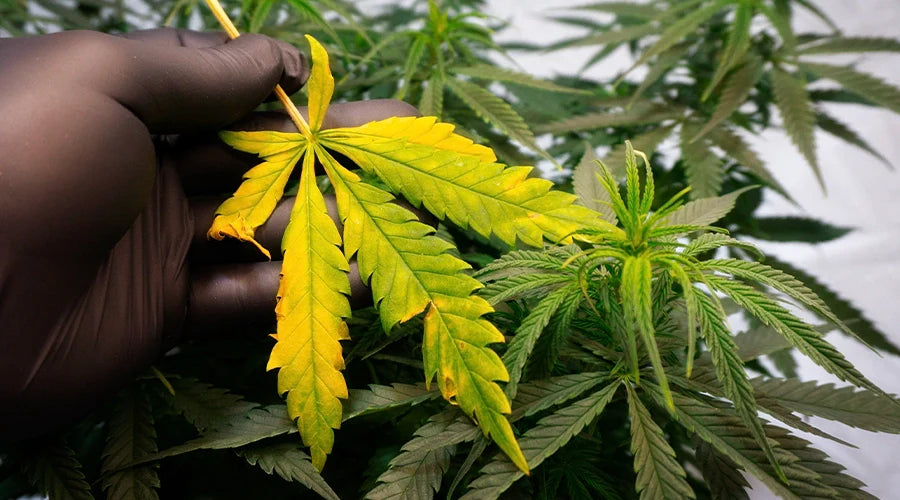
The Nutrient burning It is a common problem that can affect the health and productivity of marijuana plants. Understand the causes and know How to identify and treat This problem is crucial for any cultivator.
That is why today in this article, we will explain the main reasons for which marijuana leaves can be dried Due to the burning of nutrients and we will offer solutions and advice to prevent it.
Excess nutrients: how to identify burning in your marijuana plants
He excess nutrients, commonly known as Nutrient burningIt is a frequent problem in marijuana cultivation. This phenomenon occurs when plants receive more fertilizers than they can process, resulting in an accumulation of mineral salts in the substrate. This accumulation causes damage to the roots and, consequently, throughout the plant.
Identify the burning of nutrients In time it is essential to avoid severe damage to your plants. The First signs usually appear on the leaves, especially on the tips and edges. You will notice that the tips of the leaves begin to become yellow, and then become browns and crispy. This is a clear indication that the roots are absorbing more nutrients than they can handle, resulting in a kind of "burn."
As the problem progresses, the edges of the leaves can also begin to Show signs of burn, becoming brown and dry. The leaves can be curved down, as if they are trying to protect themselves from excess nutrients. In addition, the general growth of the plant can be affected, with a slower and atrophied development.
It is important to note that the Nutrient burning Not only does it affect the visual aspect of plants, but it can also have repercussions on their health and productivity. The roots damaged by excess nutrients have difficulty absorbing water and other essential nutrients, which can lead to generalized deficiency and a weakening of the plant.
In addition, the Nutrient burning It can be confused with other problems, such as nutritional deficiencies or diseases. Therefore, it is crucial to carefully observe the leaves and the general behavior of the plant to determine if it really is an excess of nutrients.
Solutions and tips for burning nutrients in marijuana
When your marijuana plants show signs of Nutrient burning, it is crucial to act quickly to remedy the situation and avoid major damage. Here we present five effective solutions to treat the burning of nutrients:
1. Root washing
He roots washing It is one of the most effective methods to eliminate excess nutrients accumulated in the substrate. It consists of irrigating the plant with clean water and balanced pH to drag mineral salts. It is recommended to use at least twice the capacity of the plant container in water. For example, if the plant is in a 10 -liter pot, you must use 20 liters of water for washing. This process will help clean the roots and restore an adequate balance of nutrients.
2. Nutritive solution adjustment
After carrying out roots, it is important Adjust the nutritious solution that you are using. Reduce the concentration of fertilizers in irrigation water to avoid a new accumulation of nutrients. Use a more diluted solution and observe how plants react before returning to normal dosage. In addition, be sure to use high quality and specific fertilizers for each stage of plant growth.
3. PH control of substrate and irrigation water
Keep the adequate pH Both substrate and irrigation water is essential for the health of your plants. An unbalanced pH can hinder the absorption of nutrients and contribute to the accumulation of salts. For marijuana cultivation, the ideal pH of the substrate should be between 6.0 and 7.0. Use pH meters to monitor and adjust the pH as necessary, using products such as buffer solutions to stabilize it.
4. Use of specific enzymes and products for root washing
In addition to water washing, there are products on the market designed to break down accumulated salts and help the plant recover more quickly. These products contain enzymes that decompose nutrient waste in easier to eliminate ways. Consult in specialized stores to find recommended products for this purpose and use them according to the manufacturer's instructions.
5. Continuous monitoring and food adjustment
Once you have applied corrective measures, it is vital monitor continuously Your plants to make sure they do not show signs of burning nutrients. Adjust the food according to the needs of your plants and the growth stage in which they are. Keep a registration of fertilizers dose and observe any change in the development of plants to make timely adjustments.
Differences between nutrient burning and other problems in cannabis
Correctly identify the Nutrient burning In your marijuana plants it is crucial to apply proper treatment and avoid confusion with other common problems. Here we present the key differences between the burning of nutrients and other problems that can affect your cannabis plants.
Nutrient burning
Nutrient burning is characterized by:
- Quemned sheets: The tips of the leaves become brown and seem burned.
- Yellow or brown leaves: The leaves can have yellow or brown discoloration at their edges.
- Raid of the leaves: The leaves can begin to be upward.
- Accumulation of salts in the substrate: You can notice an accumulation of white salts on the surface of the substrate.
- Symptoms in the oldest leaves: The symptoms usually appear first in the oldest leaves and extend towards the youngest if the problem persists.
Nutrient deficiency
Unlike nutrient burning, Nutrient deficiency shows the following signs:
- Yellow leaves: The leaves can become yellow, but often starting from the base of the plant and moving up.
- Slow growth: Plants can show a slower growth than usual.
- Spots on the leaves: Brown or purple spots may appear on the leaves.
- Smaller leaves: New leaves can grow smaller than normal.
- Specific symptoms: Each nutrient deficiency has specific symptoms, such as discoloration of the veins in the case of magnesium deficiency.
Water stress
He Water stress It occurs when plants receive too much or very little water. Symptoms include:
- Withered leaves: The leaves can be withered and flaccid.
- Yellowish leaves: The lack of water can cause yellow leaves, while excess can make yellow and fall.
- Dry or soaked substrate: The substrate may be extremely dry or soaked, depending on whether there is a lack of water.
Pests and diseases
The pests and diseases They can also cause damage to plants that can be confused with the burning of nutrients. Symptoms include:
- Spots on the leaves: Yellow, brown or black spots caused by fungi or bacteria.
- Perforated leaves: Visible physical damage as perforations in the leaves caused by insects.
- Mold or dust: Presence of mold on the surface of the leaves or white dust that indicates a fungal infection.
Temperature stress
He temperature stress It can result in symptoms similar to the burning of nutrients, such as:
- Sun -burned sheets: The leaves can present brown or burned areas due to excessive exposure to light.
- Rolled leaves: The leaves can curl up or down in response to extreme heat.
- Discoloration: The leaves can be discolored due to too low or high temperatures.
The health and vitality of your marijuana plants depend largely on a correct identification and treatment of problems such as nutrient burning. Understanding the causes, applying effective solutions and taking preventive measures are fundamental steps to prevent your plants from suffering and ensuring a high quality harvest. Remember, the key is to maintain an adequate nutrient balance and follow the best cultivation practices.
Identify the burning of nutrients In time and differentiate it from other problems is essential to avoid irreversible damage. Be sure to follow our recommendations and adjust the care of your plants as necessary to keep them in optimal conditions.