

In the world of horticulture and, more specifically, in cannabis cultivation, the success of a healthy and productive crop often begins with a fundamental step: the effective rooting of plants. This is where rooting hormones, essential components that play a crucial role in promoting strong and healthy root development come into play. These hormones, used by both fans and professionals, are the trampoline for vigorous growth and vitality of cannabis plants.
Ring hormones are chemical compounds that stimulate the development of roots in plant cuttings. They can be found in gel, dust or liquid and apply at the base of the cutting before planting it in the substrate. These hormones help accelerate and improve the rooting process, increasing the chances of success by spreading plants by cuttings.
What are the Rooting hormones?
Ring hormones are chemical substances that play a vital role in the stimulus and development of new roots in plants. These hormones, scientifically known as auxins, are essential for the rooting process, especially when it comes to spreading plants through cuttings. They work imitating the natural signals of the plants, encouraging the growth of the roots at the cutting points of the cuttings, which is crucial for the survival and healthy growth of the new plant.
Auxins are the most common and well -known rooting hormones, with indolacetic acid (AIA) being one of the most common forms. These hormones help regulate several aspects of plants' growth and development, including cell elongation, tissue differentiation and root formation.
As for the types of rooting hormones, they are mainly in three forms:
- Liquid rooting hormones: These hormones are easy to apply and are suitable for a wide range of plants. They are especially useful for cuttings that require rapid immersion before planting them.
- Foreign fussy hormones: They are popular for their ease of use and long shelf life. The dust adheres well to the cut of the cutting, providing a gradual release of hormones as the plant begins to develop roots.
- Gel rooting hormones: This type combines the ease of application of the liquid with the adhesion of the dust. The gel maintains the contact with the cutting and protects the cut while the roots are formed.
Benefits of using rooting hormones
The use of rooting hormones in horticulture, and specifically in cannabis cultivation, offers a series of significant benefits that optimize and enhance the development of plant roots. These benefits are reflected not only in a higher survival rate of cuttings, but also in the vigor and general health of plants. Let's see how these hormones improve the development of roots and their impact on cannabis cultivation:
- Root growth stimulation: Rooting hormones actively promote root formation in plant cuttings. When applying rooting hormones in the cut of the cut, cell differentiation in that area is stimulated, which leads to rapid and efficient formation of new roots. This is especially critical in cannabis cultivation, where a robust root system is essential to absorb nutrients and water efficiently.
- Increased success rate in propagation: The cuttings treated with rooting hormones have a significantly higher success rate compared to unrelated cuttings. This is crucial for cannabis growers that depend on consistent and successful propagation to maintain the continuity and quality of their crops.
- Accelerated root development: Ring hormones not only promote roots formation, but also accelerate this process. In cannabis cultivation, this means that the cuttings are established more quickly, which allows a faster transition to the vegetative growth phase, essential for an efficient culture cycle.
- Improves the health and vitality of plants: A well developed root system allows a better absorption of water and nutrients, which translates into healthier and vigorous cannabis plants. This is especially beneficial during the growth and flowering phases, where the demands of the plant are greater.
- Transplant stress reduction: Ring hormones can help mitigate transplant stress in cannabis cuttings, ensuring a softer transition from the rooting phase to the growth phase.
- Growth uniformity: The use of rooting hormones can contribute to a more uniform growth between cuttings, which is important to maintain consistency in a cannabis culture, especially when it comes to plants of the same genetic.
Rooting hormones for cuttings
The use of rooting hormones in cannabis cuttings is a common and highly effective practice that significantly increases the chances of success in the propagation of plants. The cuttings, being part of the plant separate from the main one, need to quickly form a new root system to survive and prosper. This is where rooting hormones play a crucial role. Next, they are offered tips and techniques for the effective application of rooting hormones in cuttings of cannabis:
- Sample selection: Choose healthy and vigorous cuttings of a mother plant. The cuttings must have at least a couple of nodes and be cut with a sharp and sterilized tool to avoid infections.
- SQUE PREPARATION: Before applying rooting hormones, it is important to make a clean cut in the cut. A diagonal cut increases the absorption surface for hormones and facilitates the development of roots.
- Choice of rooting hormone: Decide whether to use rooting hormones powder, liquid or gel, based on personal preference and ease of use. Each type has its advantages.
- Application of rooting hormone: If you use dust or gel hormones, immerse the cut end of the cutting in the product. For liquid hormones, it may be necessary to immerse the cuttings for a specific period.
- Avoid excess hormones: A thin layer of rooting hormone is sufficient. Excess can be counterproductive, inhibiting the development of roots.
- SQUE PLANTING: Once treated with rooting hormones, propose the cutting in an adequate culture medium, such as peat, perlite or rock wool, keeping it wet but not saturated.
- Optimal environmental conditions: The cuttings need a humid and warm atmosphere to root well. Using a propagator or a plastic cover can help maintain moisture.
- Patience and care: The cuttings will take several days or weeks to develop roots. During this time, it is crucial to maintain stable conditions and avoid disturbing cuttings.
How to use rooting hormones
The proper use of rooting hormones is a crucial aspect to ensure success in plant cultivation, especially in cannabis cultivation. Here I present a step by step guide for the correct application of these hormones, considering the differences between the different types (liquid, powder, etc.):
Selection and preparation of the cuttings
- Choose healthy cuttings from a cannabis mother plant. Look for stems that have at least two nodes.
- Use a sharp and disinfected tool to make a clean and angle in the cut, preferably just below a node. This increases the available surface for root formation.
Preparation of the work area
- Make sure the work area is clean and free of pollutants.
- Have the culture medium at hand where you will plant the cuttings, which can be mob, perlite, rock wool or a similar substrate.
Choice of the type of rooting hormone
- Liquid hormones: Ideal for a quick and uniform application.
- Powdered hormones: Preferred for its ease of use and long duration.
- Gel hormones: They provide consistent coverage and protect the cut.
Application hormones application
- Liquid: Mix the solution according to the manufacturer's instructions. Dip the cut end of the cutting in the solution for a few seconds and then let it drain.
- Powdered: Moisten slightly the cutting end of the cutting and then put it out of the hormone dust. Shark the excess.
- In gel: Apply a thin gel layer directly at the cutting end of the cutting, making sure to completely cover the area.
SQUE PLANTING
- Insert the subject treated into the prepared culture medium, preventing hormones from rubbing.
- Ensure the cutting to keep right and have a firm contact with the medium.
Creation of an adequate environment
- Keep cuttings in a humid and warm environment. You can use a propagator or cover them with a transparent plastic bag to maintain moisture.
- Make sure the cuttings receive indirect and soft light, avoiding direct sunlight.
Post-Plantation care
- Slightly water the cuttings to keep the humid, but not saturated.
- Regularly ventilate to prevent mold and allow an exchange of fresh gases.
- Watch the rooting signs, which generally occur in a few weeks.
Transplant and final observations
- Once the cuttings have developed a robust root system, they can be transplanted to a larger container or the final culture place.
- Keep records of your process to improve techniques in future propagations.
- Experiment with different types of hormones to find the one that best works with its variety of cannabis and cultivation conditions.
Gel rooting hormones
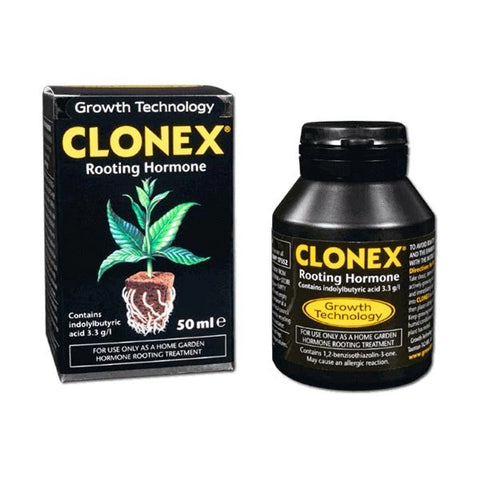
He Clonex rooter It is a good option if you decide to use gel rooting hormones, they are a popular option among cannabis growers for several reasons, including quality/price and their effectiveness. Next, we explore the specific advantages and characteristics of gel hormones, together with a detailed application guide and tips to maximize its efficacy in cannabis cultivation.
Advantages and characteristics
- Adhesion and protection: The gel adheres well to the cut of the cutting, providing a protective layer that keeps hormones in direct contact with the plant tissue.
- Controlled release: The gel releases hormones gradually, which can be beneficial for constant and effective rooting.
- Ease of use: The gel application is simple and less messy compared to liquid and powder forms.
- Less risk of contamination: Being a more viscous means, gel is less likely to spread and contaminate unwanted areas.
- Suitable for a variety of cuttings: The gel works well with a wide range of cuttings, including cannabis, providing uniform and effective coverage.
Application guide and tips
- Preparation of cuttings: Select healthy and vigorous cuttings from the cannabis plant. Make clean and angle cuts to increase the exposed surface.
- Gel application: Apply a thin gel layer directly on the cut of the cut. Be sure to cover the cutting area and the nearby nodes where the roots will form.
- Avoid excess: A fine layer is enough. Too much gel can inhibit air exchange and root formation.
- SQUE PLANTING: Insert the courage treated in your chosen culture environment. It can be peat, perlita, rock wool, or a substrate designed specifically for cuttings.
- Appropriate environmental conditions: Keep cuttings in a humid and warm environment, ideal for rooting. The indirect light is preferable.
- Continuous care: Watch the moisture level of the culture environment and maintain constant humidity without saturating.
- Patience and observation: The rooting process can take several weeks. Monitor progress and look for signs of root growth.
- Timely transplant: Once the cuttings have rooted and shown signs of growth, prepare them for transplantation to a larger or permanent culture medium.
- Experimentation: Do not hesitate to adjust the amount of gel or the application method according to the specific needs of your cannabis plants.
Foreign fussy hormones
Enraizantes powder hormones are a popular option among cannabis growers due to their specific advantages and characteristics. Next, these advantages are detailed and an application guide is offered, together with tips to maximize its effectiveness in cannabis cultivation.
Advantages and characteristics
- Long duration: Foreign folding hormones generally have a longer shelf life compared to liquid or gel forms.
- Ease of use: They are easy to apply, and do not require preparation or mixing.
- Lower risk of contamination and overapplication: Being a dry powder, there is less risk of bacterial or fungal contamination. In addition, it is more difficult to apply in excess, unlike liquid or gel forms.
- Economic: They are usually cheaper and efficient, since a small amount can treat many cuttings.
- Storage and transport: They are easy to store and transport, without the need for special conditions such as cooling.
Application guide and tips
- SQUE PREPARATION: Select and cut healthy cannabis cuttings. Make clean and angle cuts to increase the contact surface.
- Moisten the cut: Before applying the dust, moistens slightly the cut end of the cut. This helps the dust adhere better.
- Dust application: The end of the cutting of the cutting in the rooting hormone dust. Be sure to completely cover the cut and the lower nodes.
- Shake the excess: Gently shake the cuthex to remove excess dust. A too thick layer can be counterproductive.
- Plantation: Plant the cutting treated in an adequate culture medium, such as peat, perlita, rock wool, or a substrate designed for cuttings.
- Maintain optimal conditions: Place the cuttings in a controlled environment, with high humidity and moderate temperature. Avoid direct sunlight.
- Irrigation: Keep the wet substrate, but not saturated. Excessive irrigation can wash rooting hormones and encourage rot.
- Patience and monitoring: Wait for the roots to develop, which can take several weeks. Look at the cuttings regularly to detect growth or problems.
- Transplant: Once the cuttings have rooted successfully, they can be transplanted to a larger or permanent culture medium.
Liquid rooting hormones
Liquid rooting hormones are a preferred option by many growers due to their unique characteristics and advantages. Next, these advantages are detailed and an application guide is provided, together with tips to maximize its efficacy in cannabis cultivation.
Advantages and characteristics
- Easy absorption: Liquid hormones are easily absorbed by the cut, which can accelerate the rooting process.
- Precise and uniform application: They allow a more controlled and uniform application, ensuring that the cutting receives the appropriate amount of hormones throughout the cutting area.
- Adjustable concentration: Some liquid rooting hormones come in adjustable concentrations, allowing the grower to customize the power according to the specific needs of the plant.
- Versatility: They are suitable for a wide range of plants, including delicate cannabis varieties.
- Rapid preparation: They do not require complex preparation, which makes them convenient for immediate use.
Application guide and tips
- SQUE PREPARATION: Choose healthy cuttings of a cannabis mother plant. Make clean and angle cuts to increase the absorption surface.
- Hormone preparation: If the liquid rooting hormone needs to be diluted, follow the manufacturer's instructions to obtain the desired concentration.
- Immersion of the cut: The cutting end of the cutting in the liquid hormone immerses. The immersion time can vary according to the product instructions, but it is generally a few seconds to a minute.
- Avoid excess hormone: After immersing the cuthex, it gently shakes to remove excess fluid.
- SQUE PLANTING: Plant the courage treated in a adequate wet culture medium for cannabis cuttings.
- Maintain adequate conditions: Make sure the cuttings are in a humid and warm environment, with indirect light to encourage rooting.
- Monitoring and care: Regularly review the cuttings to make sure that the medium remains wet and observes signs of rooting.
- Timely transplant: Once the cuttings have developed a good root system, transfer them to a larger culture medium.
- Experimentation and adjustments: Do not hesitate to experiment with different concentrations and immersion times to find what works best for your specific cannabis variety.