

In recent years, the interior cultivation of plants, especially cannabis, has gained remarkable popularity. Traditionally, Indoor culture enthusiasts have resorted to closets and spaces confined to cultivate their plants.
Do you want to grow marijuana at home but you don't have a closet? Don't worry, it's possible! Find a space in your home with enough light and ventilation. Use LED or HPS lights to illuminate your plants and make sure you have quality pots and land. In addition, it is necessary to maintain constant attention to nutrition, irrigation and maintenance to promote healthy and robust growth of plants.
Opting a full room offers several significant advantages. First, it provides greater space, thus allowing cultivators to handle a broader number of plants and facilitate their access and maintenance. In addition, a larger room offers better microclimate management (temperature, humidity, and air circulation), crucial factors for a healthy and productive crop. The use of advanced technologies such as Indoor culture LED in a more spacious room is also more efficient, since these lighting systems are ideal to cover larger areas, guaranteeing a more uniform and effective light distribution of light for all plants.
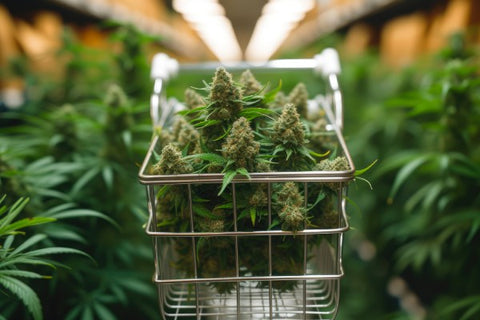
Room preparation for interior cultivation without closet
When it comes to establishing an inner crop without closet, the choice and preparation of the room are fundamental to guarantee the success of your plants. Here we guide you on how to select the right room and prepare it for an efficient indoor culture.
SELECTION OF THE INTERNAL CULTURE ROOM WITHOUT CABINET
- Size and space: Choose a room that adjusts to the number of plants you plan to grow. You need enough space for plants, as well as for the necessary equipment, such as lights, fans and humidifiers.
- Temperature control: The room should allow efficient temperature control. Extreme temperature variations can negatively affect your plants.
- Ease of access to electricity and water: Make sure the room has easy access to electricity sources to connect the Indoor culture LED lights and other equipment, and to a water source for irrigation.
- Security and privacy: Consider security and privacy, especially if you are cultivating plants that require discretion, such as cannabis.
Preparation and necessary room conditions
- Isolation: A good isolation is crucial to maintain a stable culture environment. This includes sealing holes and making sure the windows and doors do not allow light or air leakage.
- Ventilation: Install an efficient ventilation system. An air extractor and a fan are essential to renew the air and maintain adequate levels of CO2, in addition to controlling moisture and temperature.
- Wall lining: Use reflective materials on the walls to maximize the efficiency of light. This is particularly important when using Indoor LED cultivation, since it helps distribute the light evenly.
- Temperature and humidity control: Consider installing a dehumidifier or humidifier, depending on the specific needs of your plants and the climate of your region.
- Electrical security: Make sure that the entire electrical installation is safe and waterproof. Indoor culture implies a high use of electricity, so security is essential.
- Access and comfort: Organize the space so that it allows you to easily access all plants for their care and maintenance.
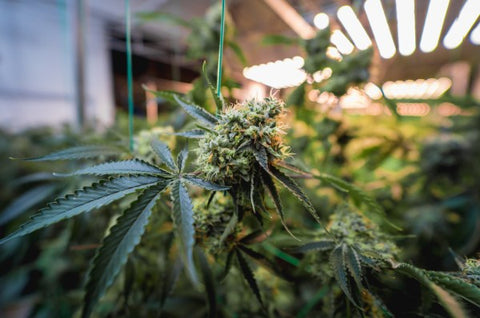
Essential equipment for Indoor culture
The success of an interior crop depends largely on the equipment you use. Here we detail the essential equipment, putting special emphasis on LED for Indoor culture and comparing different types of lights.
Lighting for marijuana cultivation Indoor
- LED lights for Indoor culture (Light emitting diode): LEDs are highly efficient and consume less energy than other types of lights. They offer a complete range of light spectra, which is crucial for different stages of plant growth. Its useful life is longer and generate less heat, reducing the risk of damaging plants and reducing the need for additional ventilation.
- HPS/MH lights: Traditionally popular, HPS lights are known for their intense yellow/orange light, ideal for the flowering phase. However, they consume more energy and generate more heat than LEDs, which may require additional cooling systems. MH (metallic halide) are excellent for the vegetative growth phase due to its bluish light, MH lights are also less efficient in terms of energy consumption and heat production compared to LEDs.
Other essential teams
- Ventilation system: Air extractors and Fans to maintain air flow and CO2 renewal.
- Climate control: Thermometers, hygrometers and controllers to regulate temperature and humidity.
- Timers: To control light cycles precisely.
- Systems of Irrigation: Automatic or manual systems, depending on the size and scale of your crop.
- Containers and culture media: Pots, containers, and the choice of culture medium (earth, coconut, hydroponic, etc.).
- Nutrients and supplements: Fertilizers for marijuana and specific additives for the different stages of growth.
- Measurement instruments: pH meters and conductive to control water quality and nutrients.
Installation of LED lights for Indoor culture
The proper installation of LED lights is crucial to maximize the efficiency and performance of your Indoor culture. Here you have a step -by -step guide to install LEDs, along with tips for optimal operation.
Step by step guide for installation
- Suitable LED selection: Choose a LED system that suits the size of your room and the specific needs of your plants. Consider factors such as the spectrum of light, intensity and coverage area.
- Room preparation: Before installing the lights, make sure your room is prepared. The walls must be covered with reflective material, and the room must be free of any material that can obstruct the light or be a fire danger.
- Installation of supports or hooks: Install supports or hooks on the roof at an adequate distance. Make sure they are firmly anchored to sustain the weight of LED lights.
- Placement of LED lights: Hang your LED lights on the supports or hooks. Make sure they are uniformly distributed to cover the entire cultivation area.
- Height adjustment: Adjust the height of the lights according to the growth stage of the plants. The lights must be closer during the seedling stage and further during flowering to avoid burns.
- Electrical connection: Connect your LED lights to the energy source. Use timers to control light cycles.
- System test: Light the lights to make sure they work correctly and that the distribution of light is uniform.
Tips for maximizing efficiency
- Light intensity control: Use intensity regulators if your LEDs allow it, to adjust the intensity according to the plant growth phase.
- Adequate light cycles: Establish appropriate light cycles for different stages of growth. For example, more hours of light during the vegetative phase and less during flowering.
- Regular maintenance: Clean your LED lights regularly to make sure they work with maximum efficiency. Dust and dirt can block the light.
- Environment monitoring: Look at your plants and adjust the height and intensity of the lights as necessary. Plants that receive too much or very little light will show signs of stress.
- Use of reflectors: Make sure the walls and surfaces around the plants are reflective to maximize the efficiency of light.
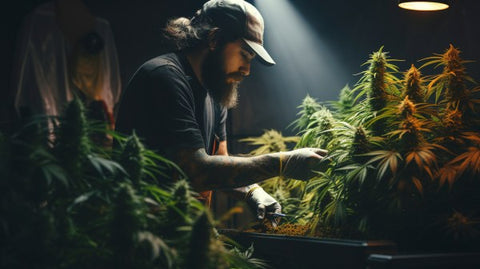
Cultivation environment configuration
To guarantee a successful interior crop, it is crucial to maintain optimal conditions in the cultivation environment. Here I offer you a guide on how to achieve it and strategies to maximize space and efficiency in an interior cultivation room without closet.
Maintenance of optimal conditions
- Temperature control: Keep a constant temperature suitable for the type of plants you are growing. Generally, this means about 20-25 ° C during the day and a little fresher during the night.
- Moisture regulation: The relative humidity must be adjusted according to the growth stage of the plants, with higher levels (60-70%) for seedlings and lower (40-50%) for the flowering phase.
- Adequate ventilation: Make sure your room has a good air flow to supply fresh CO2 and eliminate excess moisture and heat.
- Appropriate lighting: Use timers to regulate light cycles and make sure the LED lights are placed at the right height.
- PH monitoring and soil nutrition: Regularly controls pH and nutrients from the soil or hydroponic solution to ensure a balanced growth environment.
Maximization of space and efficiency
- Use of plant training techniques: Use techniques such as Apical Poda or Topping, Poda lst (Low Stress Training) or Scrog (Screen of Green) to control growth and maximize production in a limited space.
- Vertical design: Consider the use of shelves or a Vertical hydroponic system to make the most of the vertical space.
- Strategic plant distribution: Place the plants so that they all receive an equal amount of light and air, avoiding overcrowding.
- Equipment organization: Place the equipment so that it is easily accessible to maintenance, but without obstructing the space of the plants.
- Use of appropriate containers: Choose containers of the appropriate size to maximize space and promote good root development.
- Zoning of the culture area: Divide the room into areas for different stages of growth, if possible, to optimize the conditions for each stage.
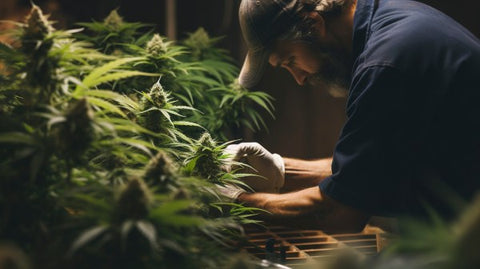
Common problems and solutions in the Indoor culture
Indoor culture can face various challenges. Here we identify some common problems and offer solutions, together with advice to prevent diseases and pests.
Lighting problems
- Symptom: Elongated or weak plants.
- Solution: Make sure the plants receive enough light. If you are using Indoor culture LED, adjust the height or intensity as necessary.
Irrigation problems
- Symptom: Yellow or fall sheets, root rot.
- Solution: It improves drainage and adjusts the frequency of irrigation. Do not excessively laugh and make sure the ground is dry to touch before watering again.
Nutritional unbalance
- Symptom: Slow growth, discolored or burned leaves.
- Solution: Check and adjust the dose and balance of nutrients. Use a pH meter to make sure the soil or nutritious solution are in the right range.
Temperature and humidity problems
- Symptom: Growth stopped, mold or fungi.
- Solution: Use a thermohigometer to monitor and adjust temperature and humidity. Make sure the ventilation system is working properly.
Marijuana diseases and pests
- Symptom: Presence of insects, spots or discoloration in leaves and stems.
- Solution: Identify plague or disease and treat with the right product. For fungal diseases, it improves air circulation and reduces moisture.
Tips for preventing diseases and pests
- Rigorous cleaning: Keep the room and equipment clean to reduce the risk of diseases and pests.
- Quarantine of new plants: Before introducing new plants in your culture space, keep them in quarantine to make sure they do not bring pests or diseases.
- Environmental control: Make sure temperature and humidity are always at optimal levels to prevent the proliferation of fungi and pests.
- Regular inspection: Examine your plants regularly to detect early signs of problems and act quickly.
- Use of natural preventive methods: Consider the use of biological control, such as beneficial insects, or organic sprays to prevent infestations.