Indoor growth: maintenance checklist every 48 hours (light, irrigation, climate and nutrients)
If you want him indoor growth be constant and smooth, it is not enough to “look at the closet” from time to time. The difference between a crop that advances strongly and another that remains halfway is usually in the regularity: small frequent reviews that prevent problems from accumulating. This guide is designed so that, every 48 hours, you know exactly what to check in light, irrigation, climate and nutrition, with a realistic and easy to repeat routine.
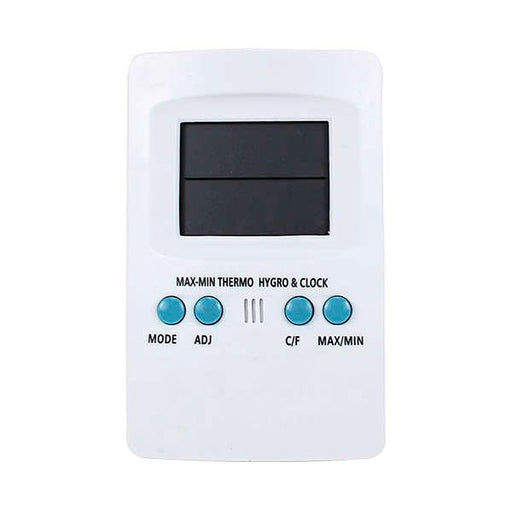
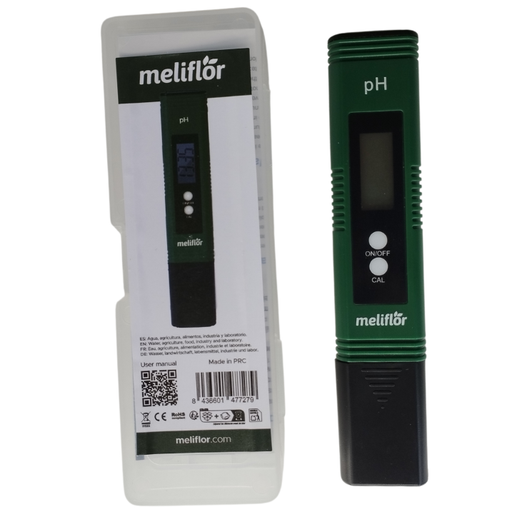
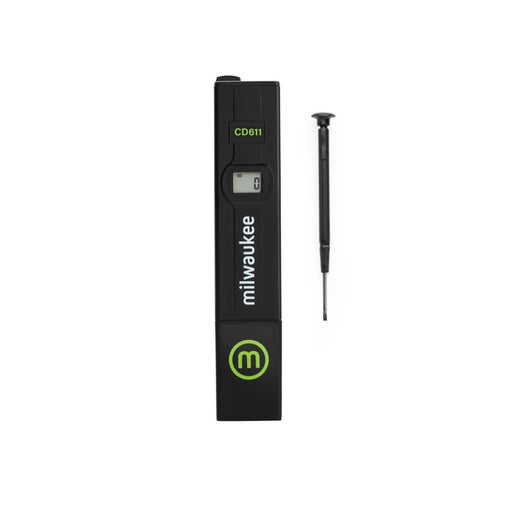
At Grow Industry we work daily with control and maintenance tools for indoor growing. Therefore, in addition to the checklist, you will find practical recommendations and direct links to products that help you automate and measure accurately: analog timer, digital thermo-hygrometer without probe, 15W clamp fan, Meliflor pH meter and EC Eco Milwaukee meter.
Checklist every 48 hours to keep the crop stable
Check every 48 hours: 1) photoperiod and lighting status, 2) temperature/humidity and air circulation, 3) actual need for irrigation and drainage, 4) pH and EC of the nutrient solution. With these four checks you reduce stress, slow down development less and detect deviations before they become a problem.
Why a 48-hour routine works better than “fixing everything” at once
Inside, almost everything is connected. A slight increase in temperature can lower the relative humidity, which accelerates transpiration, the pot dries out sooner, the plant drinks more and, if the nutrition is also concentrated, the salinity in the substrate can increase. At first glance it seems that “suddenly” there are burnt ends, but the normal thing is that the imbalance has started several waterings ago.
Reviewing every 48 hours is not about obsessing, but about having a clear protocol. Also, if you are setting up the space from scratch or want to improve the configuration, you may be interested in reading these guides from Grow Industry:
- Indoor cultivation step by step
- How to grow indoors with LED
- Indoor temperature and humidity control
- How to set up an interior in your room
- Indoor cultivation without a closet
With a well-established foundation, the checklist becomes a quick routine: 10–15 minutes to review what is important and continue with your day.
1) Light: photoperiod, intensity and electrical safety
Lighting is the engine of vegetative development. If the photoperiod is out of adjustment, if the lamp is too close or if there is a connection failure, the plant will notice it immediately. In this part, the objective is to ensure that the light remains constant and that the system works without risks.
Photoperiod: check that the programming is fulfilled
In vegetative, 18/6 is usually used. What is important is not only the number of hours, but the regularity. To automate, a analog timer It allows you to set on and off stripes and forget about doing it by hand. Every 48 hours, check:
- That the timer shows the correct time (especially after power outages).
- That the programmed sections are well placed (tabs/pins).
- That “continuous mode” has not been activated by accident.
- That the dark period is really dark (without pilot lights inside the cabinet).
Lamp height and plant response
There is no universal distance because it depends on power, type of luminaire (LED, HPS, CMH), canopy temperature and crop density. The most practical way to tune is to combine observation with coherence:
- Very long internodes: usually indicates lack of intensity or excess distance.
- Upper leaves curled upwards and “tense” appearance: there may be excess intensity or heat near the cup.
- Yellowing located above: If it coincides with heat or with the lamp very close, check the distance and temperature.
If you've changed a bulb or are adjusting a new LED, make micro-adjustments and wait a couple of days to evaluate, rather than going up and down every few hours.
Quick electrical check (safety and stability)
Indoors, an electrical failure is not only for the crop: it can overheat a power strip, disconnect the extraction or cause a power outage at the worst moment. Every 48 hours:
- Checks cables for pinches, aggressive bends or hot spots.
- Ensures that the power strip is not overloaded.
- Check that the plugs are firm and not “dancing.”
- Keep connections out of areas with water or drainage.
2) Climate: temperature, humidity and air circulation
If there is a golden rule in indoor cultivation, it is this: stability rules. You can have a “perfect” temperature on average and still suffer problems if there are heat spikes, sudden drops at night or uncontrolled humidity. Therefore, measuring well is key.
Measures temperature and humidity with maximums and minimums
A digital thermo-hygrometer without probe It is a simple tool, but very useful because it records maximums and minimums. It's just what you need to detect spikes when you're not looking.
As a usual reference in vegetative:
- Temperature (light on): 22–26°C.
- Temperature (light off): 18–21°C.
- Relative humidity: 55–70% (adjusting according to plant density and ventilation).
Checklist every 48 hours:
- Check the maximum/minimum values of the thermo-hygrometer and note if there are repeated changes.
- If there are spikes, think “what changed”: heat wave, heating, extraction, door open, etc.
- Check if the measurement is at the correct height (cup area, not close to the ground).
Internal ventilation: moves air without punishing plants
Air movement strengthens stems, helps prevent moisture pockets, and improves gas exchange. A 15W clamp fan It is practical for cabinets because it is fixed to bars or sides and allows the flow to be directed.
Review every 48 hours:
- Check that the fan rotates without strange noises (signs of wear or dirt).
- Direct the flow so that it is indirect (that the leaves move smoothly, not that they “tremble”).
- Avoid always aiming at the same point so as not to dehydrate a specific area.
- Remove dust from grates if you notice a loss of flow.
Quick read of weather-related symptoms
Without turning this into a “problem list,” there are typical signs that help you hone in:
- Fallen leaves with wet substrate: excess water or lack of oxygen in roots, sometimes aggravated by high humidity and poor ventilation.
- Fallen leaves with dry substrate: lack of watering or excessive heat that triggers perspiration.
- Spots or dull appearance: There may be stress due to oscillations or a combination of high temperature and low humidity.
3) Irrigation: real need, drainage and health of the substrate
Irrigation is where the most mistakes are made indoors, especially when the grower tries to “get it perfect” too often. Watering by calendar usually leads to excess, and excess is the gateway to poorly oxygenated roots, slow growth and irregular nutrition.
How to decide if it's time to water without complicating things
The most reliable way in substrate is to combine two simple checks:
- Pot weight: Learn the “freshly watered” weight and the “when it's time” weight.
- Surface humidity: touches the top 2–3 cm; if it's still very wet, you can usually wait.
In the indoor growth, a watering pattern that keeps the substrate aerated is preferable. If it is always soaked, the plant pays for it even if the top looks healthy.
Drainage: your indicator of whether the substrate breathes
A well-done irrigation is not “just pour water”; is to provide a homogeneous solution and allow the excess to escape from the bottom. In general, a little drainage helps prevent salt buildup and gives you a sample to evaluate pH/EC if you need it.
Checklist every 48 hours (especially if you have watered in that period):
- Check that the water does not remain on the surface; If it becomes waterlogged, the substrate may be compact.
- Check that the dishes are not left with stagnant water for hours.
- Observe if the drainage comes out very slowly: it may indicate saturation or lack of aeration.
Signs of Poorly Adjusted Irrigation (and How to Correct)
If you detect any of these scenarios, adjust the pattern before touching fertilizer:
- Decayed leaves after watering: reduces frequency and improves aeration; Let it dry more between waterings.
- Light pot the next day: in very hot environments, you may need more volume per irrigation or improve humidity/temperature so as not to “dry like crazy.”
- White crust on surface: there may be accumulation of salts; reviews EC and considers more balanced risks.
If you are in soilless systems (coconut, hydro), the focus changes and it is advisable to review basic concepts of nutrient solutions and parameter control. In that case, this reading can help you: Complete Hydroponic Growing Guide.
4) Nutrients: pH and EC so that the plant takes advantage of what you give it
Nutrition is not “more is better.” Indoors, the real control is done with two values: pH (so that the elements are assimilable) and E.C. (to know how much concentration of salts you are providing). If you do not control them, it is easy to get into loops: you increase doses because the plant “asks”, but in reality it is blocked by pH or excess salinity.
pH: Adjust the water before watering
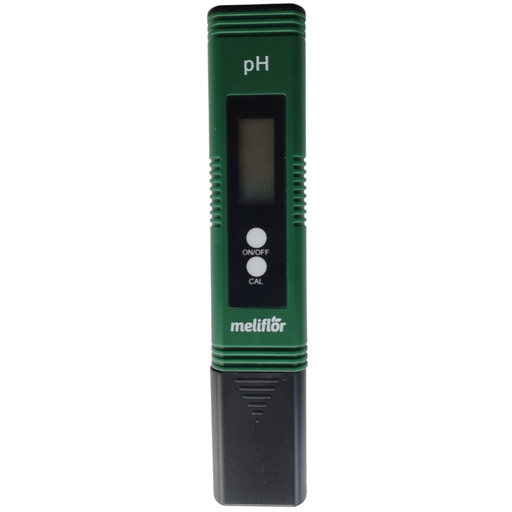
A Meliflor pH meter It allows you to measure quickly and accurately to leave irrigation in range. In soil substrate, the typical range is around 6.0–6.5. In coconut and hydro it usually goes a little lower, but the important thing is to be consistent and avoid large jumps.
Checklist every 48 hours:
- Measure the pH of the water once you have the complete mixture (water + fertilizers + additives).
- If you correct, do it little by little and measure again.
- If you notice recurring problems, take a drainage sample promptly to see if the substrate is leaking.
If you use regulators, follow an orderly method: add nutrients, measure, adjust, and measure again. In the Grow Industry store you will find different pH adjustment options and meters to work with precision.
EC: controls concentration and avoids accumulation
The EC Eco Milwaukee meter It is a practical tool to know the conductivity and adjust doses without going blind. The range will depend on genetics, pot size, light intensity, temperature and exact stage within vegetative, but as general guidance:
- Small/rooting plants: Lower EC.
- Advanced vegetative with good rhythm: moderate EC.
- If there is heat stress or irregular watering: lower the concentration a little before insisting with “more food.”
Checklist every 48 hours:
- Measure the EC of the nutrient solution before watering.
- If there are symptoms of excess (burnt tips, very dark leaves, rigid growth), reduce.
- If the crop is stable, maintain the dose and prioritize regularity.
How to interpret pH and EC without going crazy
The key is to look at trends, not obsess over a decimal. A practical tip: write down values in a notebook or cell phone note (pH/EC/temperature/humidity and if you have watered). Indoors, this mini logbook allows you to detect patterns in two weeks better than any “feeling”.
In the indoor growth, many problems attributed to “lack of fertilizer” end up being a pH adjustment or an excess of salts due to too concentrated irrigation for days. If you measure, you see it.
Complete maintenance checklist every 48 hours
This is the operational part. You can copy it as is and use it as a fixed routine. If a review comes out “everything OK”, perfect: don't change anything just to change it. If there is a deviation, adjust only what is necessary and check again at the next inspection.
A) Lighting
- Check that the photoperiod is met and that there are no schedule changes.
- Check analog timer: correct time, programming intact, proper mode.
- Observe the plant's response: internodes, upper leaves, signs of heat.
- Check electrical connections and keep cables away from water.
B) Temperature and humidity
- Read maximums and minimums in the digital thermo-hygrometer without probe.
- Confirm that the sensor is in the cup area and not attached to the ground.
- If there are peaks, adjust extraction/entry or habits (prolonged openings, schedules).
C) Air circulation
- Check operation of the 15W clamp fan: stable rotation, without strange noises.
- Direct indirect flow and alternate direction if space allows.
- Clean grates if dust accumulates.
D) Irrigation and substrate
- Evaluate if it is necessary to water: pot weight + humidity in the first centimeters.
- If you have watered, check drainage and avoid standing water in dishes.
- Observe leaves after watering: decay or excess brightness are clues.
E) Nutrient solution (pH and EC)
- Measure pH with Meliflor pH meter once the mixture is complete.
- Measure EC with EC Eco Milwaukee meter before watering to adjust concentration.
- If there are symptoms of excess or blockage, prioritize lowering concentration and stabilizing, rather than adding “more.”
Quick check table (print and have on hand)
| Area | What to check | Objective | Recommended tool |
|---|---|---|---|
| light | Schedule, on/off, distance | Regularity and healthy response | Analog timer |
| Climate | Maximum/minimum temperature and HR | Stability, no repeated spikes | Digital thermo-hygrometer |
| Air | Internal movement, moisture pockets | Smooth and indirect flow | 15W clamp fan |
| Irrigation | Pot weight, drainage, plates | Aerated and non-waterlogged substrate | Visual control + routine |
| pH | Measure and adjust before watering | Correct assimilation | pH meter |
| E.C. | Measure concentration of the mixture | Avoid excess and accumulation | EC meter |
Typical problems that this routine detects in time
The advantage of checking every 48 hours is that you catch the problem when it is still small. These are the most frequent cases and what each one usually indicates:
The timer “has moved” and the schedule no longer matches
If the light turns on or off outside of schedule, the crop loses pace. Solution: check the analog timer, confirm the time, correct the programming and make sure the selector is in the correct mode. If there are power outages in your area, it is worth checking this more often.
High temperature with low humidity
This combo usually results in somewhat rigid leaves, drier tips, and pots that become lighter sooner. Solution: confirm readings with the digital thermo-hygrometer and adjust ventilation/entry, schedules or light power according to your installation. In parallel, check irrigation and nutrient concentration to avoid forcing.
High humidity without enough air movement
If the cabinet becomes “heavy”, with a sensation of standing air, the risk of problems with the leaves and substrate surface increases. Solution: improves internal circulation with 15W clamp fan and prevents the flow from always hitting the same point.
pH out of range during several irrigations
It is a classic cause of blockages. If the pH goes down, the plant stops absorbing well even if there are nutrients. Solution: always measure with the pH meter Once the mixture is complete, adjust and maintain the criterion constantly, without sudden changes.
EC too high (or progressive increases)
When EC gets out of hand, burnt tips, a darker blade, and slower progress appear. Solution: control with the EC meter, low concentration and returns to stability before “squeezing” again.
Tips to make the checklist really useful
1) Change one thing at a time
If you touch light, irrigation, ventilation and dosage on the same day, then you will not know what has worked. Adjust what is essential and evaluate in the next review.
2) Write down four pieces of information and you will have control
No need for a spreadsheet. By noting maximum/minimum temperature, maximum/minimum humidity, pH and EC when you water, in two weeks you will see clear patterns. That's gold to keep the indoor growth stable.
3) Automate the basics and measure what is important
Automation eliminates human errors, but it only works if it is well reviewed. That is why the most practical combo for the 48-hour routine is usually: timer so as not to fail with schedules, thermo-hygrometer to detect peaks and pH meter + EC meter so as not to pay attention to nutrition.
Frequently asked questions
Is it necessary to check the crop every day?
Not always. With a complete review every 48 hours, if the space is well set up and you have reliable measurements, you can maintain stability without continually adjusting. In periods of heat or changes in season, it is advisable to be more attentive to maximums and minimums.
Can I grow without measuring pH and EC?
It is possible, but the risks of blockage and excess salts greatly increase, especially if you use mineral fertilization or if the starting water varies. Measure pH with a pH meter and EC with a EC meter gives you real control over what goes into the substrate.
What do I do if the leaves fall but the substrate is wet?
The most common thing is excess watering or lack of oxygen in the roots. Let it dry more between waterings, improve air circulation and avoid low temperatures with high humidity. Before increasing doses of nutrients, stabilize the environment.
Should the fan be pointed directly at the plants?
Better not. The ideal is an indirect and distributed flow. With a clamp fan You can direct the air so that it bounces off the wall and creates general movement.
How do I know if the light is too close?
If you notice intense heat in the upper area, “tense” leaves, curling upwards or localized yellowing in the crown, check the distance and maximum temperature. Adjust little by little and observe 48 hours before moving again.