

The micropropagation of marijuana plants has emerged as a crucial technique in the cannabis industry, revolutionizing the way in which these plants are propagated and cultivated.
Micropropagation has become a fundamental pillar in the commercial production of marijuana plants due to its numerous advantages. This technique allows rapid and efficient cloning of plants, which guarantees the reproduction of high quality genotypes and obtaining diseases free of diseases and pathogens. In addition, micropropaciation offers the possibility of conserving and spreading rare and valuable genotypes, thus contributing to genetic diversity and the development of new cannabis varieties with specific characteristics, such as cannabinoid content, terpenes and disease resistance. In an increasingly competitive and regulated market, the ability to produce large amounts of uniform and high quality plants quickly and reliably has become essential to meet the growing demand for quality cannabis products. In this sense, micropropagation plays a crucial role in providing an effective tool for the expansion and sustainable development of the cannabis industry.

Micropropagation of marijuana plants
Micropropagation is an advanced method of vegetative propagation that is carried out in a controlled laboratory environment. This process involves taking small samples of plant tissue from a mother plant selected by its desirable characteristics, such as high cannabinoid production or disease resistance. These samples are disinfected thoroughly to eliminate any microbial contamination and then place in a sterile culture medium. In this medium, tissue cells are stimulated to divide and multiply, forming vegetative outbreaks identical to the mother plant.
Once the outbreaks reach adequate size, they are transferred to another culture medium that favors the development of roots. Here, the outbreaks develop a functional roots system that allows them to absorb water and nutrients from the substrate. Finally, young plants gradually acclimatize normal environmental conditions outside the laboratory, such as sunlight and humidity, to prepare them for cultivation in the field or in greenhouses.
How to perform the micropropagation of marijuana plants
Micropropagation in marijuana plants is a delicate process that requires precision, care and a specific set of techniques and tools. Next, the step -by -step process is detailed, together with the necessary tools and conditions to guarantee effective micropropication.
Step by step to perform micropropagation in marijuana
- Mother plant selection: Choosing a healthy marijuana plant with desirable characteristics is the first crucial step. This plant will serve as a source of the expancies.
- PREPARATION OF THE EXPANCE: A small part of the mother plant is cut, such as an outbreak or a stem segment, making sure it is free of diseases or pests.
- Explant sterilization: The explanation is cleaned with a sterilizing solution to eliminate possible pollutants and acclimata to laboratory conditions.
- In vitro culture: The expanch is placed in a culture medium that contains nutrients, vitamins and hormones. This medium stimulates the growth and formation of new tissues.
- Multiplication of outbreaks: Once the samples have been established in the culture medium, the tissue cells are stimulated to divide and multiply, forming vegetative shoots.
- Rooting: Newly formed outbreaks are transferred to a medium that promotes roots development.
- Acclimatization: Young plants gradually get used to external conditions, starting in an environment with high humidity and progressively adjusting to a drier and brighter environment.
Tools and conditions necessary for the micropropagation of marijuana plants
To carry out the micropropagation of marijuana plants effectively, a series of specific tools and conditions is required. Here is a list of the necessary tools and conditions:
- Sterile and controlled environment: It is essential to maintain a completely sterile work environment throughout the micropropagation process to prevent microbial and fungal contamination. This is achieved using a Flow Hood laminar (laminar flow bell) to provide a clean and contaminant -free air flow.
- Autoclave: It is used to sterilize laboratory instruments, cultivation bottles and other equipment necessary for micropropagation, ensuring an environment free of contaminants.
- Microscopes: It is an essential tool to examine and evaluate plant tissues during the micropropagation process, allowing possible microbial contamination and evaluate the development of shoots.
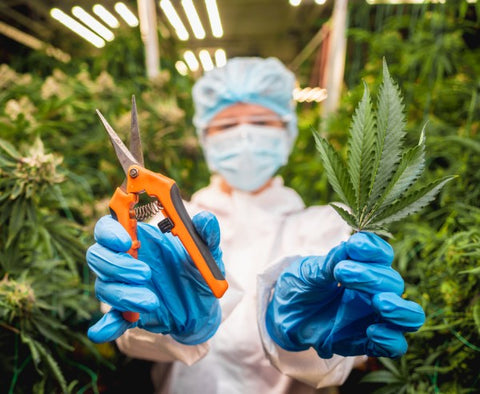
- Surgical scalpels and pruning scissors sterile: They are used to take samples of plant tissues of the mother plant and to make precise cuts during the in vitro cultivation process, ensuring proper handling of the tissues.
- Cultivation jars and sterile containersS: They are necessary to contain cultivation and plant tissues during the micropropagation process, providing an adequate environment for the growth and development of shoots.
- Culture media: The specific culture media for micropropagation, such as the MS (Murashige and Skoog) medium, provide the necessary nutrients and hormones for the growth and multiplication of plant tissues, ensuring an optimal development of shoots.
Environmental conditions for micropropagation of marijuana plants
The ideal environmental conditions for the micropropagation of marijuana plants play a crucial role in the success of the process. Here are some important conditions to consider:
- Temperature: The optimal temperature for the micropropagation of marijuana plants usually ranges between 20 ° C and 25 ° C during the day and between 18 ° C and 22 ° C during the night. It is important to maintain a stable temperature to promote healthy growth and avoid stress in plants.
- Relative humidity: Adequate relative humidity in the culture environment is essential to minimize water loss due to perspiration and maintain adequate water balance in plants. Relative humidity is recommended from 60% to 80% for the micropropagation of marijuana plants.
- Lightning: During the in vitro establishment phase, artificial lighting is used in the form of LED lights o Fluorescent to provide the necessary energy for photosynthesis and initial growth of the outbreaks. A 16 -hour light photoperiod and 8 hours of darkness must be provided to promote vigorous growth.
- Ventilation: Adequate ventilation is required in the micropropagation area to guarantee a constant supply of fresh air and to avoid the accumulation of carbon dioxide and pathogens. However, it is important to avoid strong air currents that can damage plants tissues.
- Sterility: Maintaining a sterile environment is essential to prevent microbial and fungal contamination throughout the micropropagation process. Strict hygiene and disinfection practices should be followed, including sterilization of equipment and culture media, to guarantee the success of in vitro cultivation.
By maintaining these optimal environmental conditions, the survival rate and the growth of the shoots during the process of micropropagation of marijuana plants can be significantly improved, resulting in healthy and vigorous plants ready for its transplant to ex Vitro conditions.
Techniques used in the micropropagation of marijuana plants
In the micropropagation of marijuana plants, various specialized techniques are used to achieve the rapid and efficient multiplication of plant tissues. Next, some of the most common techniques used in this process are presented:
- Fabric cultivation: This technique implies the cultivation of small samples of plant tissue, such as buds or stems segments, in a sterile culture medium. This medium provides the necessary nutrients for the growth and development of tissues, as well as the plant hormones required to stimulate the formation of new outbreaks and roots.
- Multiplication of outbreaks (proliferation): Once plant tissues have been established in the culture medium, their multiplication is encouraged through active cell division. This leads to the formation of multiple vegetative outbreaks from a single sample of tissue, which allows mass production of genetically identical plants.
- In vitro rooting: After vegetative outbreaks have reached adequate size, they can be induced to develop functional root systems in a specific culture medium. This in vitro rooting process allows the production of complete plants with healthy root systems, which facilitates its subsequent transplant to ex Vitro cultivation conditions.
- Acclimatization to ex vitro conditions: Once plants have developed adequate roots, they are gradually acclimatized to normal environmental conditions outside the laboratory environment. During this process, plants are gradually exposed to sunlight and gradually adjust to the humidity and temperature of the outside environment.
- Development of specific protocols: In the micropropagation of marijuana plants, it is common to develop specific protocols adapted to the characteristics of the species and cultivation conditions. These protocols may include adjustments in the composition of the culture environment, the time of exposure to light and other environmental factors to optimize the growth and development of plants.
These techniques are fundamental in the process of micropropagation of marijuana plants and allow mass production of genetically identical plants for commercial purposes, genetic or research conservation.
Advantages and challenges of micropropagation of marijuana plants
The micropropagation in cannabis culture offers a series of significant advantages, but also presents certain challenges and limitations.
Advantages of micropropagation in cannabis cultivation
- Genetic consistency: When cloning plants from a selected mother plant, a genetic uniformity is guaranteed, which is crucial to maintain the quality and specific characteristics of cannabis.
- Accelerated and efficient production: MicroProparation allows rapid multiplication of plants, which is especially useful to respond to the high demand of the cannabis market.
- Optimized space use: Since many plants can be cultivated in a relatively small space, micropropagation is ideal for interior operations or with limited space.
- Disease risk reduction: When cultivating in a controlled and sterile environment, exposure to pathogens is minimized, resulting in healthier plants.
- Rare varieties conservation: It allows the preservation and multiplication of rare or valuable strains that could be difficult to maintain through conventional culture methods.
Challenges and limitations of micropropagation in cannabis cultivation
- Initial costs and maintenance: Establishing a micropropication laboratory requires significant investment in equipment and continuous maintenance.
- Requires specialized expertise: The process is technical and requires trained personnel in biotechnology and in vitro cultivation techniques.
- Pollution risk: Despite sterile conditions, there is always a risk of pollution, which can ruin a whole lot of cultivation.
- Genetic limitations: The dependence of a mother plant means that any genetic limitation or susceptibility to diseases will be perpetuated in all clones.
- Adaptation to the natural environment: MicroPropagated plants may require a longer adaptation period when transferred to a natural environment, since they have been cultivated in controlled conditions.