

In the world of cannabis cultivation, the curing process is as crucial as the crop itself. A suitable curing not only enhances the aroma and taste of the butt, but it is also essential to preserve their quality and longevity. However, one of the most significant challenges during this process is the appearance of mold. The mold in cured buds not only compromises product quality, but also represents a health risk. Therefore, it is essential to understand how to prevent this phenomenon and, in case it appears, know how to handle it safely and effectively.
Cogollos with drying fungi can be an early sign of major problems during the curing process. Recognizing and addressing these problems from the beginning is vital to guarantee the integrity of the buds. In addition, in situations where the mold has already appeared, it is crucial to know how to remove the mold from dry bud without jeopard of consumer or product quality.
To prevent and eliminate mold in cured buds, ensure a relative humidity of 62% and good ventilation during curing. Regularly inspect and, before signs of mold, discard the affected buds to protect the rest.
The mold in the cured buds
The mold in cured buds is a fundamental concern for any cannabis grower. But what exactly is the mold and why does it appear in the cured buds? The mold is a type of fungus that develops in humid environments and with little ventilation. In the case of cannabis buds, this can happen when the curing process is not done correctly, maintaining inappropriate humidity levels. The mold can be developed both in the initial stages of the cure and during prolonged storage, especially if the buds are not dry enough or if stored in conditions that favor the proliferation of fungi.
It is vital to differentiate the mold from trichomes, which are natural crystalline structures present in cannabis buds and often a sign of high quality and power. While the trichomes are bright and sticky to the touch, with a crystalline or milky appearance, the mold has a rather spongy or cottoning appearance and is usually white, green or black. In addition, the mold can emit a smell of moisture or land, very different from the characteristic aroma of the trichomes.
Understanding these differences is crucial to guarantee both the quality and safety of cured buds. An identification error can lead to a product not only of lower quality but potentially detrimental to health. Therefore, learning to recognize and prevent mold is an essential step for any cannabis cultivator or consumer.
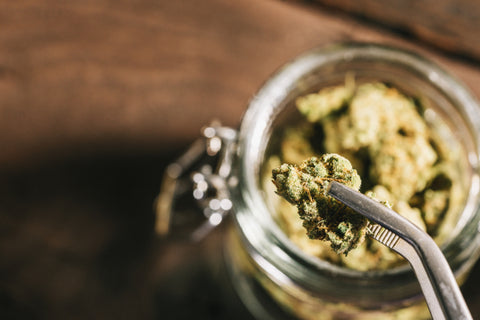
Common mold causes in the butting during drying and cured
The mold development in cannabis buds during drying and cure phases may be the result of several environmental and management factors. Understanding these causes is essential to prevent the appearance of "button with drying fungi." Next, we analyze the conditions that favor the growth of fungi and how to identify and prevent these problems:
- High humidity: The most critical factor is moisture. High moisture levels can create an ideal environment for mold growth. During drying and cured, it is essential to maintain relative humidity (HR) in a optimal range, generally between 59% and 63%.
- Insufficient ventilation: Inadequate ventilation can lead to the accumulation of humid air around the buds, promoting mold growth. It is crucial to ensure constant and effective air circulation in the drying and cured area.
- Inappropriate temperature: Too high temperatures can accelerate mold growth. Maintaining a stable temperature preferably between 18 ° C and 22 ° C, is ideal during drying and cured.
- Inappropriate storage: Save the buds in hermetic containers before they are completely dry can cause moisture accumulation and, therefore, mold.
- Excessive manipulation: Manipulating the buds frequently during drying and cured can damage them and expose them to pollution, increasing the risk of mold.
- Visual and olfactory inspection: "Cogollos with fungi in drying" often have a spongy or cotton appearance and can have a smell of moisture or land, very different from the characteristic aroma of cannabis.
- Preventive measures: To prevent mold, it is essential to control moisture and temperature, ensure good ventilation, avoid premature storage and manipulate the buds as little as possible. In addition, performing regular inspections can help detect signs of mold.
Mold prevention in the curing process
The curing process is crucial to guarantee the quality and longevity of cannabis buds. An adequate curing technique not only improves flavor and aroma, but is also essential to prevent mold formation. Next, tips and techniques are detailed for an effective curing:
- Adequate initial drying: Before starting the curing, the buds must be dried properly. This generally implies hanging the plants or branches in a controlled environment until the stems break when they bend, but without the flowers collapse.
- Moisture control: The relative humidity of the cure place must be maintained between 59% and 63%. Dehumidifiers or humidifiers can be used to adjust moisture levels as necessary.
- Constant temperature: Maintain a constant temperature between 18 ° C and 22 ° C. Higher temperatures can accelerate mold growth, while the lowest can delay the curing process.
- Use of adequate containers: Heal the buds in hermetic containers, preferably glass. The containers must be filled up to three quarters of their ability to allow adequate air circulation.
- Regular ventilation: Open cure containers daily during the first days to allow moisture output and fresh air entrance. This practice, known as "burping", is essential to avoid the accumulation of moisture and prevent mold.
- Visual and olfactory inspection: During the curing, regularly inspect the buds to detect mold signs. A smell of moisture or ground, or a spongy or cotton appearance in the buttocks, are mold indicative.
- Avoid direct sunlight: Heal the buttles in a dark place to avoid the degradation of cannabinoids and terpenes.
- Use of hygrometers: Place hygrometers inside the containers to monitor moisture. This helps adjust the conditions of the cure environment precisely.
- Cleaning and hygiene: Maintain a clean and disinfected environment for the cure, since mold and other pathogens can proliferate in dirty environments.
- Duration of the cure: The curing process must last at least two weeks, although many growers prefer to extend it to four weeks or more to improve quality.
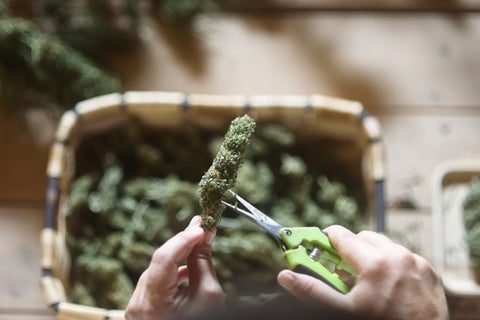
How to identify and manage the co -collides affected by mold
Identifying and handling the co -collides affected by mold is crucial to ensure the safety and quality of cannabis. Next, a guide for the identification of the mold in cured buds and the best practices for handling and discarding is offered.
Mold identification in cured buds
- Visual aspect: The mold in the buds usually appears as spots or spongy or cotton layers. It can be white, green, gray or black. Unlike the trichomes, which are crystalline or bedroom and cover the bud, the mold appears in irregular spots.
- Smell: The co -collides affected by mold often emit a smell of moisture, to ground or mold, which is remarkably different from the natural aroma of cannabis.
- Texture: To the touch, the molds with mold can feel wet or sticky in an unnatural way. While the trichomes give a sticky but dry sensation, the mold feels wet.
- Use of ultraviolet light: Ultraviolet light can help identify the mold, since it often shines under this light.
Handling and discarding of affected buds
- Do not consume moldy buttles: You should never consume co -collides with mold, since it can be dangerous to health, especially for people with committed immunological systems or with allergies to the mold.
- Use of gloves and mask: When handling moldy cogollos, it is advisable to wear gloves and a mask to avoid the inhalation of mold spores and avoid cross contamination.
- Isolation: Immediately separate the affected buds from the healthy to avoid the spread of the mold.
- Discard safe: Moth coagles must be discarded safely. It is recommended to wrap them in plastic before discarding them to avoid the dispersion of spores.
- Cleaning of the storage area: After removing the moldy button, thoroughly clean the storage area and the containers used to prevent future pollution.
- Remaining buds inspection: Thoroughly check the remaining buds to ensure that they are not affected.
- Consideration of total discard: In severe cases, it may be necessary to discard the entire harvest if the mold has contaminated extensively, since health and safety must be priority.
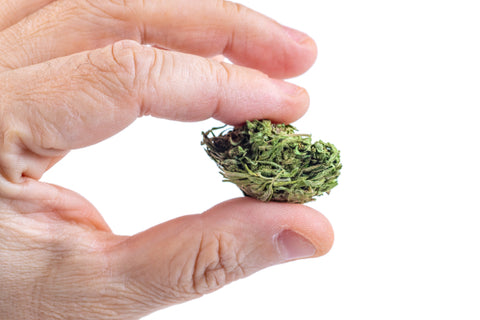
Methods to remove the mold from the dry buds
It is important to highlight that, in general, the attempt to "clean" or remove the mold of dry buds due to health risks is advisable. However, for informative purposes, we will explore some methods that have been discussed and evaluate their risks and limitations.
Methods discussed to remove the mold
- Careful cut: Some growers choose to cut the areas affected by the mold. However, this is risky since mold spores may have spread beyond the visibly affected areas.
- Cogollos washing: There are techniques such as washing with a water and hydrogen peroxide solution. The cogollo is briefly immersed in the solution and then dries completely. Although this method can reduce the visibility of the mold, it does not eliminate potentially dangerous spores or toxins.
- Exposure to ultraviolet light: Ultraviolet light can kill some superficial mold forms. However, it does not penetrate deeply into the bud and, therefore, does not completely eliminate the mold or its spores.
- Heat application: Some suggest using heat, like a low temperature oven, to kill the mold. Although heat can kill some spores, it also significantly degrades the quality of cannabinoids and terpenes.
- Use of alcohol solutions: Spraying co -collides with isopropyl alcohol has been mentioned as a method to kill the mold. However, this can be dangerous and will probably ruin the product.
Risks and limitations
- Health risk: None of these methods guarantees the complete elimination of mold and toxins spores, which can be harmful to health, especially for people with weakened immunological systems or respiratory problems.
- Product deterioration: Most of these methods can negatively alter the quality, flavor, and chemical profiles of the buds.
- INEFICACY AGAINST TOXINS: Some types of mold produce mycotoxins, which are toxic substances that are not eliminated with these methods.
- Dissemination of spores: When trying to clean the mold, there is a risk of spreading spores to other areas or products.
Long -term strategies for the conservation of mold -free buttocks
Keeping cannabis butt free of mold during long -term storage is key to preserving its quality and power. Here I present a series of advice, tools and products recommended to achieve this goal:
Storage tips
- Moisture and temperature control: Maintain an environment with a relative humidity between 59% and 63% and a constant temperature around 21 ° C. Too humid or warm environments can favor mold growth.
- Adequate containers: Use hermetic and opaque containers for storage. Glass containers are preferable, since they do not emit gases and keep the safe and air confrollos.
- Avoid direct light: Store the buttles in dark places to protect them from light, which can degrade cannabinoids and terpenes.
- Minimize air exposure: Open the containers as little as possible to avoid the entry of fresh air, which can bring moisture and mold spores.
- Regular inspections: Periodically check the buds to detect early deterioration or mold signs.
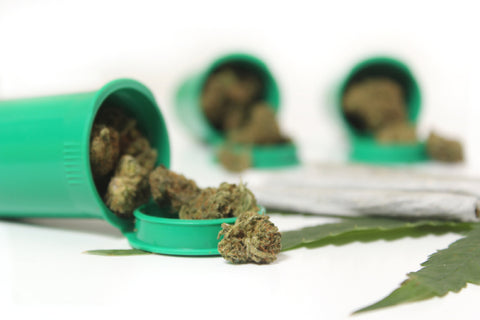
Recommended tools and products
- Hygrometers and thermometers or Thermo-hygrometer: Essential tools to monitor moisture and temperature within storage containers.
- Moisture control packages: Like packages Boveda 62 for Cure They help maintain constant relative humidity within containers.
- Specific containers for cannabis: There are containers designed specifically for cannabis storage that offer a hermetic seal and light protection.
- Desiccants: In particularly humid climates, desiccants can be used to absorb excessive humidity. However, they should be used carefully so as not to dry the buds too much.
- Vacuum conservatives: Some growers choose to use vacuum systems to seal their buds. This reduces air exposure and keeps the buttles in a controlled environment.
- Dark or opaque containers: They protect the co -collides of direct sunlight and the degradation of cannabinoids.
- Refrigeration: For a very long storage, some experts recommend refrigerating the buttocks. However, this must be done with caution to avoid condensation and increased humidity.
- Controlled climatic cameras: For large -scale growers, cameras with climate control can be a valuable investment, allowing precise control of the storage environment.