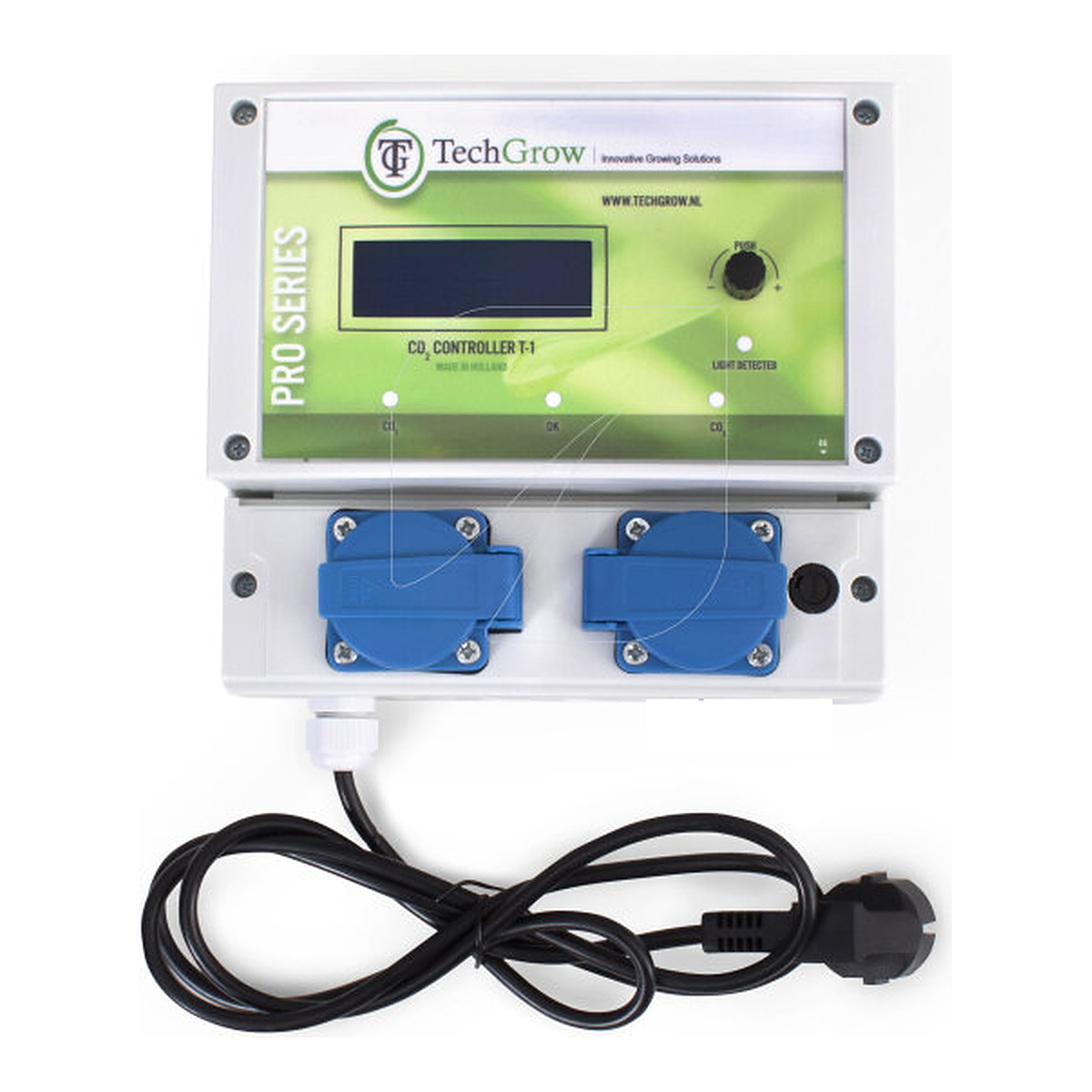
TechGrow T-1 Pro CO2 Controller – 300-2000 ppm, DIN rail and splash-proof enclosure (sensor not included)
TechGrow T-1 Pro CO2 Controller – 300-2000 ppm, DIN rail and splash-proof enclosure (sensor not included)
 Pay in one tap with Bizum — no extra fees.
-
Sensor: TechGrow S-2, NOT included
-
Range: 300-2000 ppm
-
Switching: 4 A
-
Enclosure: splash-proof
-
Mounting: DIN rail
-
Extras: automatic day/night and min./max. memory


Discover the benefits of the PRO CLUB
Discounts of up to -12%, priority shipping and more.
Easy returns within 15 days
No questions asked
Description
- ⚠️ Sensor NOT included: requires the TechGrow S-2, which Hortitec does not distribute.
- 🌿 Range: 300-2000 ppm with 4 A switching.
- ⚡ DIN rail mounting and splash-proof enclosure.
- 🔄 Automatic day/night switching and min/max memory.
- ⚠️ Safety: high CO2 is dangerous. Never enter without ventilating first.
The electrical panel format of the range. Only buy it if you already have the S-2 sensor.
Full description
TechGrow T-1 Pro CO2 Controller
🔴 Read this before buying: the T-1 Pro DOES NOT include the CO2 sensor. It requires the TechGrow S-2 sensor, which is sold separately and is not distributed by Hortitec. Without it, the controller cannot measure and is useless. We prefer to tell you in the title and here before you buy equipment that you will not be able to put into operation.
If you already have the S-2, the T-1 Pro is the professional installation controller of the range: splash-proof enclosure and DIN rail mounting.
Specifications
- Control range: 300-2000 ppm
- Switching current: 4 A
- Splash-proof enclosure
- DIN rail mounting
- Min/max memory
- Automatic day/night switching
- Sensor: TechGrow S-2, NOT included and not distributed by Hortitec
Who is it for
The DIN rail and the splash-proof enclosure place it in another category: electrical panel, wet room, permanent installation. It is not a device to hang from a hook; it is a panel component. If you have the electronics centralized in an electrical cabinet, this is the correct format.
Day/night switching
At night, the plant does not fix carbon, so enriching with the lights off is wasting gas. The T-1 Pro detects the cycle and cuts off the supply during the dark period without additional programming. The min/max memory lets you see how high and low the room has gone while you were away.
⚠️ Safety: CO2 is not harmless
CO2 at high concentrations is dangerous for people. Normal air is around 420 ppm; an enriched room operates at 1,200-1,500 ppm and above about 5,000 ppm there is a real health risk. Never enter a room with active dosing without ventilating first. Cut off the supply, extract for a few minutes and enter afterwards. In closed rooms, an independent CO2 detector is recommended.
What can it control
With 4 A of switching current, it handles the solenoid valve of a compressed CO2 cylinder or the control of a propane generator. Check the consumption of the connected equipment before wiring.
Is a controller worth it for you?
- Less than 2 m³: no. Passive consumable.
- 2-10 m³: still not worth it.
- 10-30 m³: here yes, and the compressed cylinder beats gas because it does not heat.
- More than 30 m³ with controlled climate: controller + propane combustion.
Warranty
At GrowIndustry we only work with proven quality products and trusted brands.
Every item goes through a check before shipping to make sure it arrives in perfect condition and ready to use.
Your satisfaction is our priority.
How to use