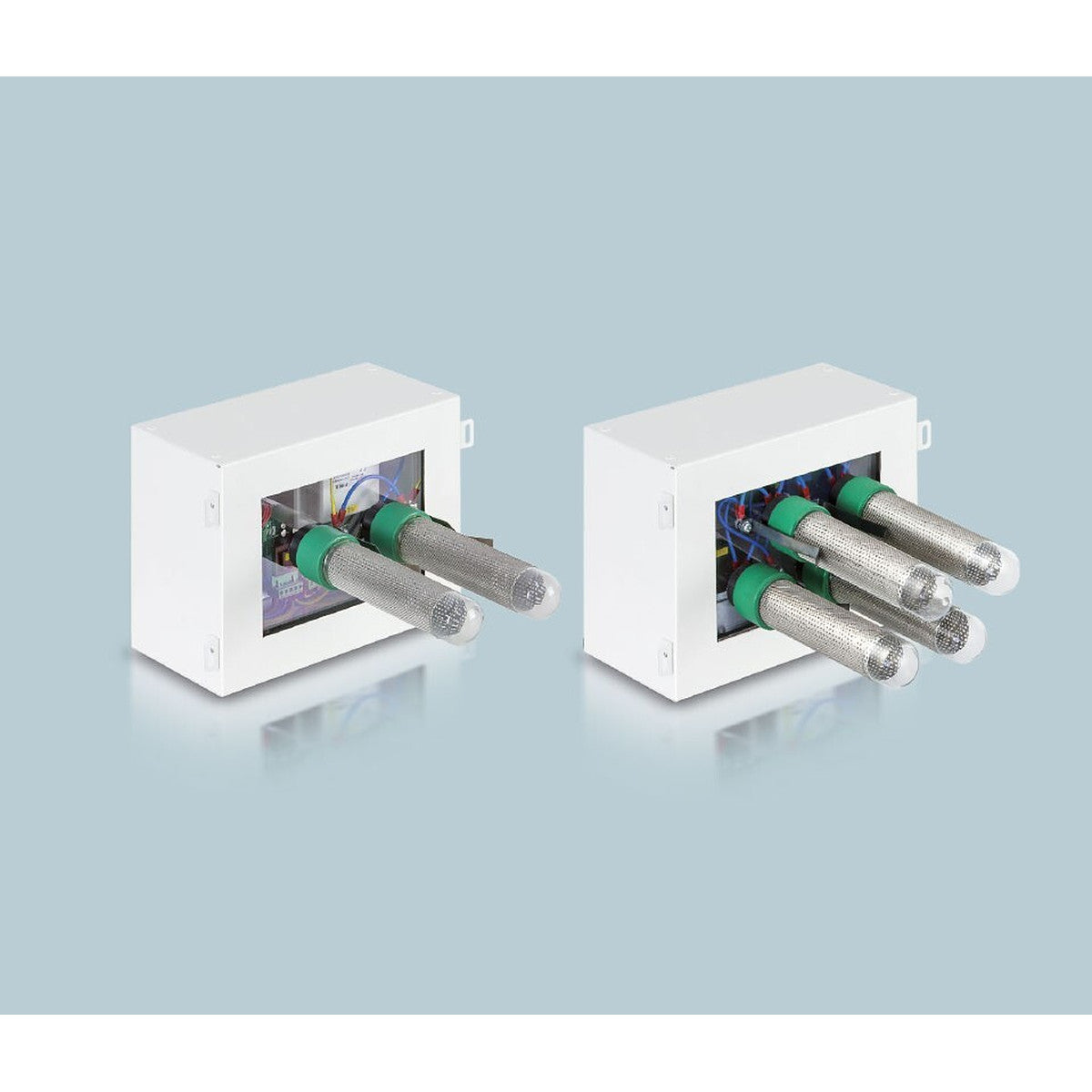
Jonix Inside Duct – Cold Plasma Purifier for Exhaust Duct
Jonix Inside Duct – Cold Plasma Purifier for Exhaust Duct
 Pay in one tap with Bizum — no extra fees.
-
Technology: NTP cold plasma
-
Installation: In-line with the exhaust duct
-
Flow rates: 500 · 1,000 · 2,000 · 4,000 m³/h
-
Residual ozone: No
-
Consumable: Plasma generator
-
Weight: From 4 to 6 kg depending on the model


Discover the benefits of the PRO CLUB
Discounts of up to -12%, priority shipping and more.
Easy returns within 15 days
No questions asked
Description
- 🌀 In-line: It is installed inside the duct and treats the entire airflow.
- 👃 Breaks down odors: It doesn't retain them like carbon; it breaks them down.
- 📈 Doesn't clog: No progressive loss of airflow due to saturation.
- 📐 From 500 to 4,000 m³/h: Four sizes depending on your extraction needs.
- 🌬️ No ozone in the room: The reaction takes place inside the unit.
No more carbon filters saturated halfway through flowering.
Full description
Jonix Inside Duct – Cold Plasma Purifier for Extraction Ducts
The Inside Duct is installed inside the extraction line and treats all the air flowing through it. Unlike a carbon filter, which traps odor molecules until it becomes saturated and must be replaced every few months, cold plasma breaks them down and does not accumulate anything: the unit maintains its performance until the generator needs to be replaced, without a progressive loss of airflow due to clogging.
Key Features
- In-line installation: it is mounted inside the extraction duct.
- Four airflow capacities: from 500 to 4,000 m³/h, to cover everything from a single room to a large facility.
- No increasing pressure drop: it does not clog like a carbon filter.
- Breaks down odors: it does not trap them; it breaks down volatile compounds.
- No ozone in the room: the reaction takes place inside the unit itself.
How to size it
Choose the model based on the actual airflow of your extractor, not the nominal rating: an extractor rated at 1,000 m³/h with elbows and a filter may be moving considerably less. If you are unsure between two models, choose the higher-capacity one; operating with plenty of headroom always delivers better results.
- 2S 500 m³/h: a small room or a large cabinet.
- 4S 1,000 m³/h: a medium-sized room with a 250–315 mm extractor.
- 2L 2,000 m³/h: a facility with several rooms on the same line.
- 4L 4,000 m³/h: a large-capacity professional facility.
Warranty
At GrowIndustry we only work with proven quality products and trusted brands.
Every item goes through a check before shipping to make sure it arrives in perfect condition and ready to use.
Your satisfaction is our priority.
How to use