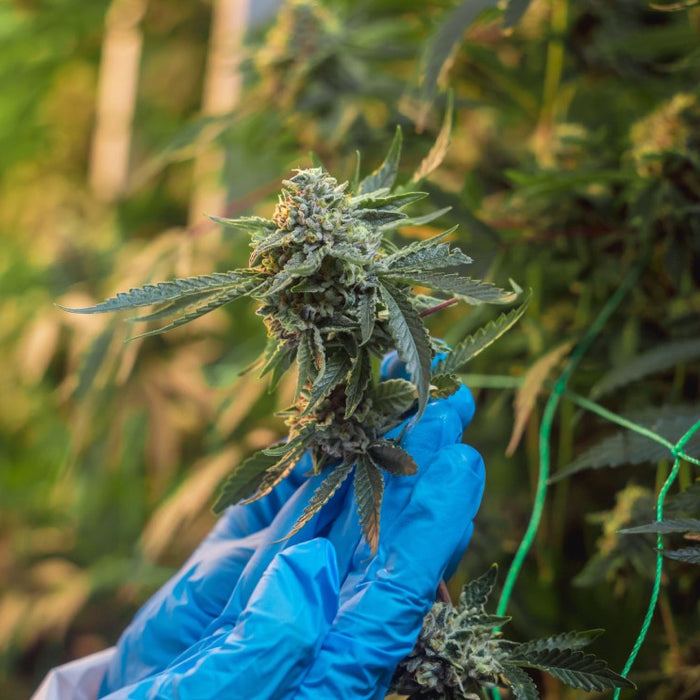
Tips Cultivation
-
You must transplant your marijuana plant when the roots have completely occupied the space of the current container, which usually occurs approximately every 2-4 weeks during the vegetative phase.Continue reading -
-
What is the micropropagation of marijuana plants
The micropropagation of marijuana plants is an in vitro propagation technique that uses small plant tissue samples to generate genetically identical clones to the mother plant. This process is carried out in sterile conditions using culture means that contain nutrients and plant hormones to stimulate the growth and development of new outbreaks. It is an efficient way to produce large amounts of uniform plants in a small and controlled space.Continue reading
-
How to increase resin in the buttles
To increase resin in buds, you can optimize factors such as plant genetics, adequate nutrition, and environmental conditions such as humidity and temperature. In addition, techniques such as selective pruning, controlled stress and the use of specific supplements can enhance resin production.Continue reading -
How to get marijuana cuttings outdoors
To propagate marijuana cuttings abroad, select healthy outbreaks, cutting with 45 ° angle, apply rooting hormone and proposed in humid substrate. Keep in a humid environment and with indirect light until rooting.Continue reading -
How to see trichomas without magnifying glass
To observe trichomes without magnifying glass, use direct light and a smartphone with a high resolution camera. Storm as much as possible and use the digital zoom to capture details. Clarity will depend on the quality of the camera.Continue reading -
What are the trichomas in Maria
The trichomas in marijuana are resinous glands that produce cannabinoids and terpenes, essential for the aroma, flavor and power of the plant. Visible as crystals, they indicate maturity and quality.Continue reading -
Poda fim (f*ck, i missed) in marijuana
Continue readingThe benefits of FIM pruning are notable. It allows cultivators to direct and improve plant growth in a less invasive way than apical pruning. When making a partial cut on the tip of the plant, the development of multiple main queues is stimulated, which leads to a thicker canopy and a greater production of buds. In addition, due to their less radical nature, plants tend to recover faster from FIM pruning than complete apical pruning. This method is ideal for those who seek to increase production without subjecting the plant to excessive stress.
-
Poda of defoliation in marijuana
Continue readingDefoliation pruning is a technique that has gained popularity in modern marijuana cultivation due to its numerous benefits. In this article, we will explore this technique in detail, from its definition to its practical execution. We will discover how defoliation pruning influences the growth of plants and how it can be an ally in the search for successful crops.
-
Pruning schwazzing in marijuana cultivation
Continue readingSchwazzing pruning has emerged as one of the most revolutionary pruning techniques in the world of marijuana cultivation, gaining popularity for its innovative approach and the significant results it offers. This unconventional pruning technique has become an outstanding practice among modern cultivators who seek to maximize the efficiency and production of their plants.
-
Types of marijuana seeds
Continue readingIn marijuana cultivation, the choice of seeds is crucial. For example, feminized marijuana seeds almost exclusively guarantee female plants, which are the ones produced by the cannabinoid cogollos. On the other hand, self -floring marijuana seeds offer a faster and less dependent on the light cycle to obtain the harvest, ideal for growers with time or space limitations.
-
Hybrid marijuana seeds
Continue readingHybrid seeds are created by the controlled crossing process between two pure or stabilized cannabis strains. The objective is to develop a plant that has a specific combination of features, such as greater resistance to diseases, a particular cannabinoid profile, or a desired growth pattern. This process allows breeders to focus on improving aspects such as power, taste, performance and cultivation ease.